Your Organization Is Already a Target — Here’s How to Stop Reacting andStart Preventing
A proactive vulnerability assessment plan is a continuous, structured process for finding, prioritizing, and fixing security weaknesses before attackers exploit them — not after a breach has already occurred.
Here’s the core framework at a glance:
| Stage | What Happens |
|---|---|
| 1. Pre-discovery planning | Define scope, assign ownership, classify assets |
| 2. Asset inventory | Discover everything on your network, including shadow IT |
| 3. Vulnerability scanning | Run automated scans (authenticated and unauthenticated) |
| 4. Contextual assessment | Evaluate findings against business impact, not just CVSS scores |
| 5. Risk-based prioritization | Rank by exploitability, asset criticality, and exposure |
| 6. Remediation | Patch, mitigate, or formally accept risk with compensating controls |
| 7. Verification and monitoring | Rescan, validate fixes, and feed results back into the next cycle |
The stakes are concrete. In December 2021, the Log4Shell vulnerability was weaponized within hours of public disclosure. That window — between a flaw becoming known and an attacker using it — has not widened since. It has shrunk. Meanwhile, CISA’s December 2022 findings confirmed that exploits against public-facing applications remain the single most common entry point for cybercriminals. Exploit activity targeting cloud apps grew 95% between 2021 and 2022 alone.
The math is unforgiving: 60% of organizations hit by a breach had known, unpatched vulnerabilities sitting on their systems. The problem is rarely finding threats — it’s having a repeatable system to act on them fast enough.
This guide gives you that system.
I’m Orrin Klopper, CEO and co-founder of Netsurit, and over nearly three decades of building IT infrastructure for more than 300 organizations across North America and beyond, I’ve seen how the absence of a proactive vulnerability assessment plan turns manageable risks into costly crises. What follows is the practical framework we use to help our clients stay two steps ahead.
Shifting from Reactive Patching to a Proactive Vulnerability Assessment Plan
Most IT teams operate in a “firefighter” mode. They wait for a vendor to announce a patch, wait for their scanner to flag a “Critical” alert, and then scramble to deploy updates. This is reactive management. It assumes you have time. In reality, CISA identified exploits against public-facing applications and external remote services (like VPNs) as the primary initial attack vectors for cybercriminals. By the time you react to a notification, the exploit may already be inside your perimeter.
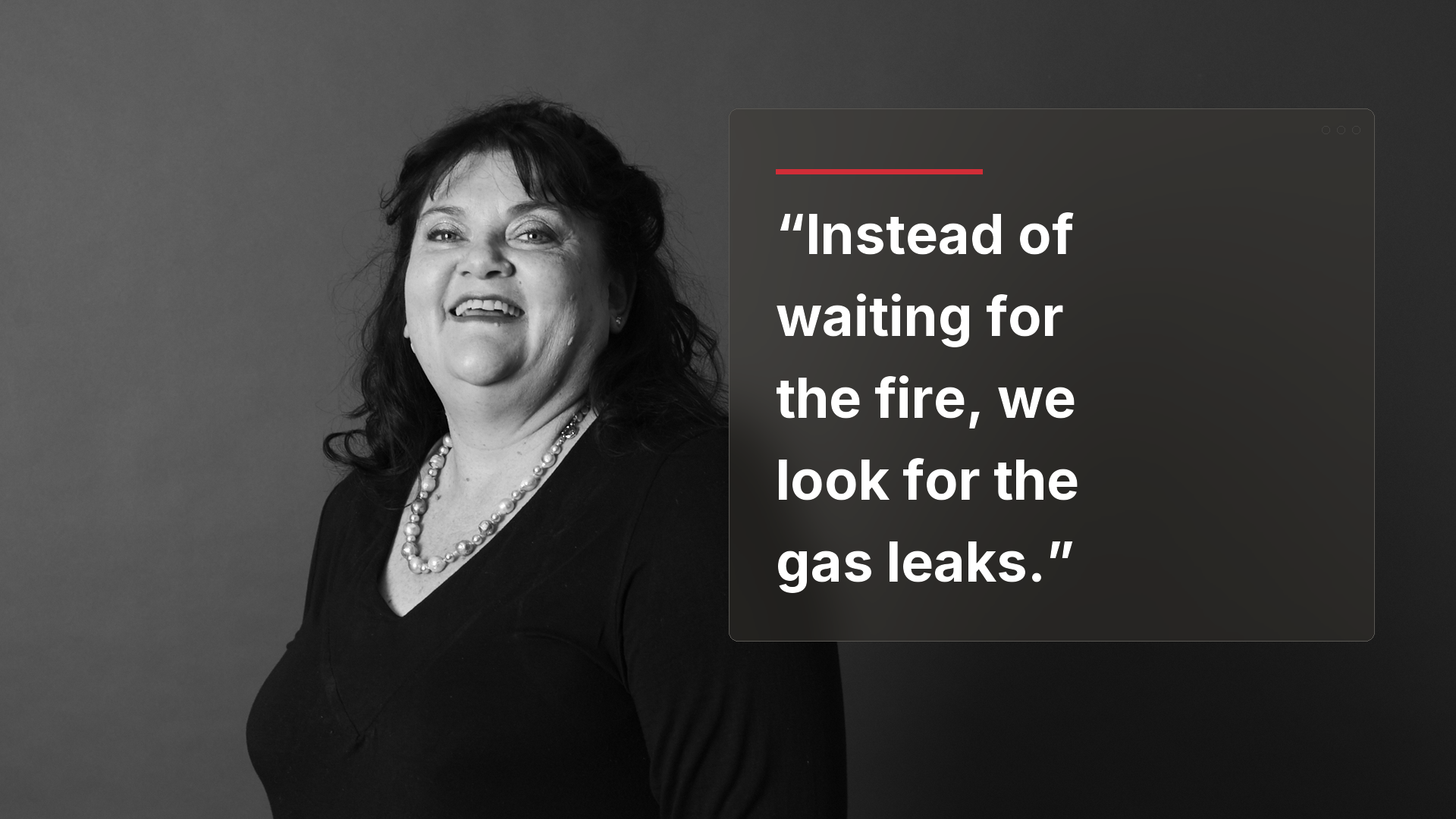
A proactive vulnerability assessment plan flips this script. Instead of waiting for the fire, we look for the gas leaks. This involves network vulnerability assessment practices that run continuously, identifying weaknesses in configuration, outdated software, and unauthorized “Shadow IT” devices before a hacker does.
| Feature | Reactive Management | Proactive Prevention |
|---|---|---|
| Trigger | Breach or patch release | Continuous scheduled discovery |
| Focus | Known CVEs with patches | Configuration, assets, and exploits |
| Speed | Slow; follows the attacker | Fast; anticipates the attacker |
| Outcome | Damage control | Risk reduction |
The High Cost of Security Debt
Security debt is the accumulation of unpatched vulnerabilities over time. According to a Ponemon Institute study, 60% of organizations hit by a breach had vulnerabilities that were known but left unremediated. This isn’t just a technical failure; it’s a financial one.
When you ignore a “Medium” risk today, it becomes a “Critical” risk tomorrow when an exploit script hits the dark web. However, there is a silver lining for those who modernize: companies utilizing AI scans and automation to find and fix flaws early cut their cybersecurity costs by an average of $2.2 million. They prevent the “debt interest”—the massive cost of a full-scale breach—from ever coming due.
Why Modern Threats Demand Continuous Discovery
The digital landscape is expanding faster than most IT inventories. Exploit activity targeting cloud apps exploded by 288% between 2021 and 2022. This growth means a once-a-quarter scan is no longer sufficient.
Consider the “Log4Shell” event of late 2021. The time between the vulnerability being disclosed and threat actors launching active exploits was measured in hours, not days. If your plan relies on monthly cycles, you are effectively leaving your front door unlocked for 29 days out of 30. To counter this, we track CISA’s KEV Catalog daily. As we look toward 2026, the trend is clear: automation and continuous discovery are the only ways to shrink the “exploit window” to a size that human defenders can actually manage.
The 7-Stage Lifecycle for Continuous Risk Reduction
A successful proactive vulnerability assessment plan isn’t a one-time project; it’s a circular lifecycle. If you stop at stage 3 (scanning), you’ve only identified the problem without solving it. If you skip stage 2 (discovery), you’re only protecting the half of your network you can see.
Our approach integrates cyber risk assessment into every phase to ensure that technical findings are tied to business realities.
Building a Comprehensive Asset Inventory for Discovery
You cannot secure what you do not know exists. This is the biggest hurdle for firms in growing hubs like Houston and Seattle. “Shadow IT”—unauthorized cloud instances or personal devices connected to the network—creates blind spots.
We recommend a “Network Ownership and Visibility Initiative” (NOVI). This involves:
- Discovery Scans: Identifying every IP address and device.
- Ownership Assignment: Determining who is responsible for each asset (e.g., the accounting department’s local server).
- Authenticated Scans: Using credentials to look inside the OS for deep-seated flaws, rather than just pinging the outside (unauthenticated).
By maintaining a cloud security assessment routine, you ensure that even temporary dev environments are accounted for in your master inventory.
Prioritizing Your Proactive Vulnerability Assessment Plan with Threat Intelligence
Not all “Critical” vulnerabilities are created equal. A “Critical” flaw on an isolated guest Wi-Fi router is less dangerous than a “High” flaw on your primary database.
To prioritize effectively, we look at the Exploit Prediction Scoring System. This tool predicts which vulnerabilities are actually likely to be weaponized.
Example: Imagine a mid-sized accounting firm in Houston. A scan reveals two issues:
- A SQL injection vulnerability on a server containing client tax data.
- A firmware vulnerability on an internal printer in their Sugarland satellite office.
Common sense (and a good proactive vulnerability assessment plan) dictates that the tax server gets fixed within hours, even if the printer flaw has a higher technical “score.” We prioritize based on Business Impact + Exploit Likelihood.
Remediation Strategies for High-Stakes Environments
Once you’ve found the holes, you have to plug them. This usually means patching, but in complex business environments, it’s rarely that simple. Sometimes a patch breaks an essential application. In those cases, we look at network security alternatives like Web Application Firewalls (WAFs) or network segmentation to “wall off” the vulnerability until a permanent fix is safe.
Trade-offs in Remediation Tactics
Every security decision involves a trade-off between protection and productivity.
- Works best when: Your systems are modern, vendor-supported (like Microsoft 365 or Azure), and have redundant failovers that allow for patching without downtime.
- Avoid when: You are running legacy software. For example, an accounting firm in Conroe might rely on legacy SCADA or tax software that only runs on a specific, older OS version. Forced patching could break the business logic.
- Risks: The primary risks are system downtime and application incompatibility. No one wants a “reboot loop” on April 14th during the height of tax season.
- Mitigations: If you can’t patch, you must mitigate. This includes “virtual patching” via an Intrusion Prevention System (IPS), air-gapping the legacy host so it can’t talk to the internet, or requiring strict Multi-Factor Authentication (MFA) for any access.
Leveraging AI and DevSecOps for Future-Proof Security
The future of the proactive vulnerability assessment plan is automated. By integrating security into the development pipeline (DevSecOps), we “shift left.” This means catching a vulnerability while the code is being written, rather than after it is deployed.
As we move toward 2026, Software Bill of Materials (SBOM) tracking will become standard. This allows us to see every “ingredient” in your software. If a new vulnerability is found in a tiny sub-component (like Log4j), we can instantly see every application that uses it. This cybersecurity consulting approach reduces the Mean Time to Remediation (MTTR) from weeks to minutes.
Overcoming Common Implementation Challenges
Building this plan isn’t without friction. Most organizations face “tool fatigue”—having too many security dashboards and not enough people to read them.
- Staffing Gaps: There aren’t enough security pros to go around. Managed services help bridge this gap.
- False Positives: Scanners often flag things that aren’t actually risks. Continuous tuning is required to keep the data clean.
- Executive Buy-in: Security is often seen as a cost center. We use IT audits and assessments to show leadership exactly how much risk is being reduced in dollar terms, helping meet regulatory standards like HIPAA or PCI DSS.
Frequently Asked Questions about Proactive Vulnerability Management
How often should we run vulnerability scans?
At a minimum, you should run automated scans weekly for critical, internet-facing assets. For internal, standard infrastructure, a monthly cadence is often sufficient. However, you should always perform ad hoc scans after any major environment change or when a significant zero-day vulnerability is disclosed globally.
What is the difference between a vulnerability assessment and a penetration test?
Think of a vulnerability assessment as a regular health check-up—it’s automated, continuous, and looks for a broad range of known issues across your whole system. A penetration test is more like a specialized stress test; it’s a manual, periodic (usually annual) exercise where an expert tries to actually break into your systems to see how far they can get.
How do we handle vulnerabilities that cannot be patched?
If a patch isn’t available or would break a mission-critical system, you must document the risk in a formal register. Implement compensating controls—such as micro-segmentation or enhanced monitoring—to reduce the likelihood of exploitation. Finally, obtain executive sign-off for “risk acceptance,” and set a mandatory review date (usually every 6 months) to see if a better solution has become available.
Conclusion
At Netsurit, we believe that the only way to win the cybersecurity arms race is to stop playing catch-up. A proactive vulnerability assessment plan replaces guesswork with data-driven defense, ensuring your organization remains resilient against the next Log4Shell-scale event. Whether you are a firm in Katy or a healthcare provider in Tacoma, the goal is the same: absolute visibility and rapid response.
Don’t wait for a breach to tell you where your weaknesses are. Start by auditing your current asset visibility and moving toward a risk-based prioritization model today. Secure your infrastructure with a proactive vulnerability assessment plan and turn your security posture into a competitive advantage.