Houston Businesses Are Falling Behind Without AI Accounting Support
Houston firms do not have a bookkeeping problem. They have a speed and accuracy problem. Mid-market companies across the Energy Corridor, Sugar Land, Katy, and Conroe are still closing books with stale spreadsheets, thin teams, and too many manual handoffs. By May 2026, AI support accounting software in Houston is no longer a nice-to-have. It is a practical requirement if you want timely numbers, cleaner audits, and fewer hours lost to repetitive work.
| Question | Quick Answer |
|---|---|
| What does it do? | Automates bookkeeping, tax filing, and reporting in real time |
| Who needs it? | Houston firms facing manual data entry or Texas tax complexity |
| How fast is ROI? | Most firms see measurable efficiency gains within 30 to 90 days |
| What’s the key risk? | Algorithmic misclassification, mitigated by human review |
| Where do I start? | Map high-friction workflows, then match software to those gaps |
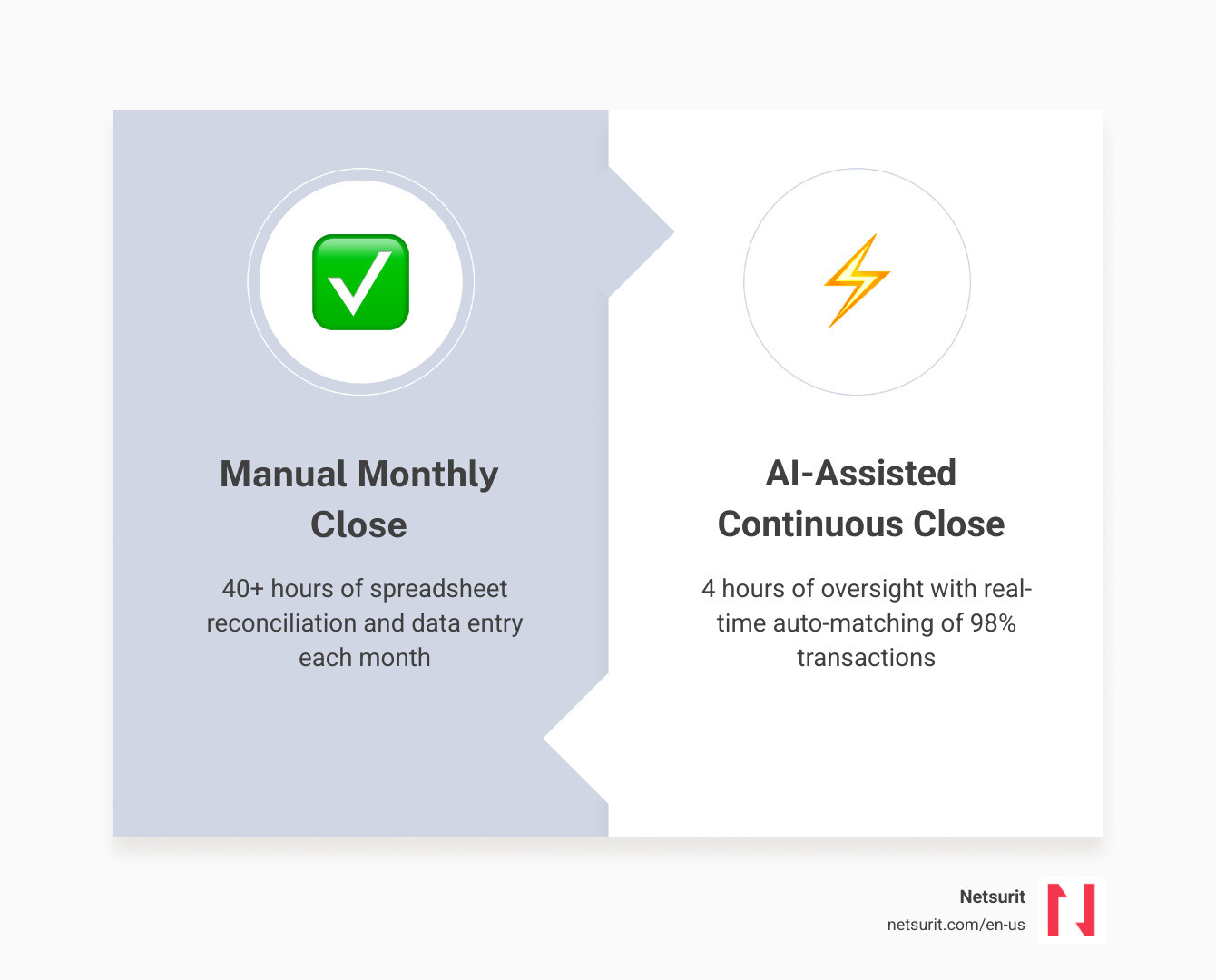
For many Houston businesses, manual bookkeeping still eats 40+ hours per month. That delay matters. A controller who reviews numbers two weeks late cannot manage cash with confidence, spot margin drift quickly, or catch tax issues before they compound. Texas-specific requirements, especially Franchise Tax calculations and local sales tax variation, make the problem worse because the work is both repetitive and precise.
AI-driven accounting platforms cut that lag. They can extract data from invoices, match transactions, reconcile feeds, and flag exceptions as they happen. In many environments, the system auto-matches roughly 98% of routine transactions and pushes the remaining exceptions to a human reviewer. That changes the role of your accounting team. Instead of hunting for missing entries, they spend time on controls, forecasting, collections, and policy decisions.
A Houston example makes the point. A field services company in Katy may process fuel receipts, equipment purchases, subcontractor invoices, and customer payments across several job sites every day. In a manual process, those entries may not hit the general ledger until the end of the week. With AI support layered over the ERP, receipts flow in daily, outliers are flagged by rule, and leadership sees a near-real-time cash picture before approving the next round of spending.
The gain is not just labor savings. Faster books change operational decisions. If a manufacturer in Conroe sees gross margin pressure on Tuesday instead of after month-end, it can adjust purchasing, production, or pricing before the issue grows. If a professional services firm in Sugar Land sees receivables slowing by client segment, it can tighten collection steps before cash gets tight.
Adoption data also shows this is no fringe trend. As of May 2026, 58% of US small businesses use generative AI in at least one function. Accounting is a natural fit because so much of the work is rules-based, document-heavy, and deadline-driven. Firms that ignore the shift are not standing still. They are choosing slower reporting cycles, more manual risk, and a harder recruiting story for finance talent.
There are limits. AI will not replace judgment on unusual transactions, legal settlements, or complex restructuring. It also needs clean workflow design to perform well. Bad source data still creates bad outputs. The right approach is controlled automation: let the system process the routine work, then require human review where the dollar value, risk, or ambiguity is high.
That is the practical case for Houston businesses in 2026. The goal is not flashy automation. It is dependable financial visibility, lower process drag, and better decisions made with current data.
Accelerate Financial Visibility with AI-Driven Systems
Houston businesses need accounting systems that do more than post transactions. They need systems that understand GAAP, keep pace with daily activity, and surface problems before month-end. Modern AI support accounting software Houston handles extraction, coding, and reconciliation so controllers can spend more time on decision support and less time on cleanup.
- Real-time GAAP Audits: AI checks transactions against accounting rules as they post, which helps keep the balance sheet audit-ready throughout the month.
- Exception-Based Reconciliation: Systems auto-match about 98% of routine entries. Your team reviews only the small set of exceptions that actually need judgment.
- OCR Data Extraction: Optical Character Recognition turns invoices, field tickets, and emailed PDFs into structured records without manual rekeying.
- Continuous Close: Finance leaders can see cash, payables, and receivables daily instead of waiting for a monthly close cycle.
The practical benefit is visibility you can act on. If collections start slipping, you see the trend within days. If expenses spike on a project in Sugar Land, the controller can raise it before it damages monthly margin. That is a better operating model than discovering problems after the close packet is finished.
Automating High-Volume Transactions in the Houston Metro
Firms in Katy and Sugar Land increasingly use API-based synchronization to connect bank feeds, AP tools, and ERPs. That shortens the gap between a transaction in the field and its appearance on the ledger. A construction-related business in Conroe, for example, can capture a materials purchase the same day it happens rather than waiting for someone to key in receipts at week end. By leveraging AI tools to reduce manual data entry in accounting firm workflows, businesses reclaim an average of 70+ hours monthly.
That time savings has a second-order effect: fewer rushed closes and fewer avoidable errors. When staff are not buried in keying and matching, they have time to review anomalies, enforce approval policies, and prepare management reporting that someone will actually use.
Trade-offs of AI Implementation
- Works best when: Handling high-volume, rules-based data such as daily retail receipts, recurring SaaS billing, expense reports, and standard vendor invoices.
- Avoid when: Managing subjective, one-time legal settlements, unusual intercompany restructures, or complex mergers that require policy interpretation and legal review.
- Risks: Algorithmic misclassification, such as coding a capital expenditure as an operating expense or assigning sales tax incorrectly.
- Mitigations: Set approval thresholds, require human review for transactions above a defined amount such as $5,000, and test rules against a recent sample of Houston-area transactions before going live.
What to watch next: by late 2026, expect more accounting teams to use AI for narrative reporting as well as transaction processing. The useful version is not automatic commentary for its own sake. It is a system that explains why cash moved, which customers are slowing payment, and where exceptions are clustering so your team can act fast.
Solving Houston-Specific Tax and Industry Challenges
Texas accounting is not simple just because the state has no personal income tax. Houston businesses still deal with Franchise Tax rules, local sales tax variation, audit documentation, and industry-specific reporting that generic accounting tools often mishandle. Modern AI agents are now trained specifically on Texas Comptroller requirements so teams can reduce filing errors and shorten review cycles.
The local context matters. A business operating in Houston, Katy, Sugar Land, and Conroe may face different tax treatment by jurisdiction, different customer contract structures, and different document flows by industry. Software that only automates generic AP and bookkeeping tasks leaves value on the table. The better systems apply local rules consistently and preserve evidence for later review.
Navigating Texas Comptroller Requirements
While Texas lacks a state income tax, the regulatory burden is still real. AI-powered tools help with several recurring tasks:
- Texas-Specific Sales Tax: AI automates calculations across municipal codes in Greater Houston using address and geolocation data, which reduces miscoding on invoices and customer charges.
- Franchise Tax Automation: AI models calculate taxable margin in near real time so finance teams can monitor liability and validate whether they fall within “No Tax Due” thresholds.
- Audit-Ready Documentation: Systems preserve a timestamped digital trail, making it easier to respond when auditors ask for source documents, approval history, or filing support.
A practical example: a multi-location services firm based in Sugar Land may sell into several nearby jurisdictions with different local sales tax implications. In a manual workflow, a misapplied rate can sit unnoticed until reconciliation or audit. With rule-based AI checks, the transaction is validated when it enters the system, and exceptions are routed for review before the filing period closes.
Industry-Specific AI Applications
- Energy Sector: In the Energy Corridor, AI automates joint interest billing (JIB) and revenue distribution, reducing the manual review burden on high-volume allocations.
- Manufacturing: Facilities in Conroe and Pearland connect shop floor data to accounting systems for faster COGS (Cost of Goods Sold) updates and tighter inventory control.
- Professional Services: Legal and engineering firms use Ai accounting optimization Houston the future of financial efficiency to forecast project overruns before they hit profitability.
These gains come with constraints. Industry-specific models work best when chart-of-accounts design, tax mappings, and source documents are consistent. If the underlying process is fragmented, the software will surface the mess faster, but it will not fix governance on its own. You still need accounting policy, approval rules, and someone accountable for exceptions.
What to watch next: sector-specific AI templates are improving quickly. For Houston businesses, the practical advance is not abstract autonomy. It is better support for oil and gas allocations, municipal tax logic, and project accounting rules that match how local firms actually operate.
Build a Scalable AI Accounting Stack for 2026
In May 2026, the focus has shifted from experimental startups to enterprise-grade platforms that integrate with existing IT infrastructure.
| Feature | Microsoft Dynamics 365 | Sage Intacct | Specialized AI Layers (e.g., Zeni) |
|---|---|---|---|
| Houston Support | Extensive local partner network | Moderate | Remote-first |
| API Flexibility | High (native M365 integration) | High | Variable |
| Texas Tax Modules | Available via local partners | Standard | Specialized |
| Target Business | Mid-market & Enterprise | Mid-market | Startups & SMBs |
Enterprise Automation with Microsoft Dynamics 365
For most Houston enterprises, Microsoft Dynamics 365 Business Central provides the most reliable path to AI-driven accounting.
- Predictive Receivables: AI models analyze payment history to predict which clients in construction or energy are likely to pay late.
- AI Agents: Deploy digital assistants like Microsoft Copilot to handle vendor inquiries and draft payment reminders.
- Netsurit Integration: As a tech partner, we secure these layers and provide comprehensive IT services for your accounting practice to ensure 99.9% uptime.
Secure Your Financial Data During AI Implementation
Transitioning to AI support accounting software Houston usually takes 30 to 90 days, but speed should not outrun controls. Financial systems hold payroll data, customer records, banking details, and tax documents. In Texas, that means security and privacy requirements are not side issues. They are part of the deployment plan from day one.
The first step is to decide what data the AI layer needs, what it should never access, and who approves exceptions. Too many implementations focus on workflow automation first and sort out permissions later. That creates avoidable risk. A cleaner approach is to define data boundaries, access rules, and logging before the first integration goes live.
Protecting Sensitive Financial Data
- SOC 2 & HIPAA Compliance: If you support healthcare providers in the Texas Medical Center, HIPAA obligations apply alongside standard financial controls.
- Role-Based Access: AI agents should only access the minimum data needed for the task, whether that task is invoice capture, reconciliation, or receivables follow-up.
- Immutable Audit Logs: Systems need tamper-evident logs so changes to financial records, approvals, and AI-generated actions can be reviewed later.
A Houston example: a shared services accounting team may process AP for multiple business units, including one healthcare client and one energy client. Those teams need separate permission sets, separate document visibility, and clear logging of who approved what. Without role-based controls, an efficient system becomes a governance problem.
Security also affects vendor selection. You should ask whether the platform encrypts data in transit and at rest, where data is processed, how long logs are retained, and how the vendor handles model training on customer data. If the answers are vague, the deployment is not ready. Good accounting automation depends on trust as much as speed.
Rapid Deployment Strategies
We follow a structured roadmap for deploying Ai in Houston a roadmap for modern accounting:
- Departmental Analysis: Identify hour-eaters such as invoice entry, bank reconciliation, and month-end accrual support.
- ROI-Based Scoring: Prioritize projects that save at least 20 hours per week or materially improve control quality.
- Prompt Engineering Training: Train Houston accounting teams to work with AI agents effectively and verify outputs instead of accepting them blindly.
A realistic rollout often starts with AP, bank reconciliation, or expense classification because those workflows are structured and measurable. More sensitive or judgment-heavy areas, such as tax position review or unusual journal entries, usually come later once controls are proven.
What to watch next: by 2026 and beyond, buyers will ask tougher questions about AI governance, not just features. Expect stronger scrutiny around auditability, approval chains, and data residency. The winners will be the firms that automate routine finance work without weakening oversight.
Frequently Asked Questions
How much time can Houston businesses save with AI accounting?
Local firms typically reduce manual labor by 70% to 80%. Mid-sized accounting departments in Houston save an average of 70+ hours per month, allowing staff to focus on high-level financial analysis.
Does AI accounting software handle the Texas Franchise Tax?
Yes. Modern enterprise AI modules are updated with Texas Comptroller rules. They automate “No Tax Due” threshold calculations and margin-based filings to ensure compliance.
Can I use AI with my existing ERP or QuickBooks setup?
In 2026, most AI accounting tools are “ERP-agnostic.” They function as a layer on top of software like QuickBooks Online or Sage, using APIs to process data without requiring a total system replacement.
What is the typical ROI for these systems?
Most Houston businesses report the system pays for itself within six months through reduced labor costs, eliminated late fees, and the capture of often-missed tax credits like R&D credits.
Conclusion
The shift to AI-supported accounting is mandatory for Houston businesses facing rising labor costs and complex Texas tax codes. Success requires balancing advanced software with rigorous IT security. By adopting Ai native accounting software, you gain the financial intelligence needed to scale in a competitive market.
Next Action: Schedule a Houston AI Strategy Consultation with Netsurit to audit your financial stack and identify your path to automation.