Modernizing Accounting AI Cash Flow Houston Strategies
The shift toward Accounting AI cash flow Houston models is driven by the need to eliminate the “month-end lag.” Traditional forecasting relies on static spreadsheets that are outdated the moment they are saved. In contrast, modern platforms like HighRadius and Zeni use “agentic AI”—autonomous software agents that monitor bank feeds and ERP data in real-time to provide a living view of liquidity.
For a mid-sized firm in Sugar Land or a startup in the Houston Tech Hub, this technology transforms the finance department from a historical recording office into a forward-looking advisory team. By leveraging AI Accounting Optimization Houston: The Future of Financial Efficiency, businesses move away from manual data entry and toward high-level strategy.
Quantifying the Impact of 95% Forecasting Precision
Precision is the primary metric of success. Tools like HighRadius achieve 95% accuracy in forecasting global inflows and outflows by applying machine learning to historical payment patterns. Instead of assuming a client will pay on the net-30 due date, the AI analyzes three years of behavior to predict they will actually pay on day 37.
This level of detail allows Houston treasurers to perform sophisticated variance analysis and scenario modeling. If an oilfield services provider is considering a major capital expenditure, the AI can simulate how that purchase impacts the 13-week runway under various market conditions. The result is often a 50% reduction in idle cash—money that can be reinvested into growth rather than sitting unproductive in a low-interest account.
Accelerating Collections with AI Invoicing
Cash flow is often throttled by “friction” in the accounts receivable (AR) process. AI invoicing solutions, such as those provided by EB DevTech, tackle this by automating the entire billing lifecycle. These systems detect errors—like duplicate charges or contract mismatches—before the invoice ever reaches the client, preventing the disputes that typically delay payment.
By using automated, behavior-based reminders, Houston firms see a 25–40% reduction in days-sales-outstanding (DSO). The AI learns when a specific client’s AP department usually processes checks and sends the reminder exactly 24 hours prior, ensuring your invoice is at the top of their digital pile.
Automating Liquidity with Agentic AI and ERP Integration
The transition from manual to autonomous finance is best understood through the capabilities of “Agentic AI.” Unlike simple automation, which follows a rigid “if-this-then-that” script, agentic systems can initiate actions, such as flagging a liquidity dip and suggesting a credit line draw-down before a human even spots the trend.
| Feature | Manual Forecasting | Agentic AI Systems |
|---|---|---|
| Data Source | Manual exports from ERP | Real-time API integration |
| Frequency | Monthly or Quarterly | Continuous / Daily |
| Accuracy | 60–75% (Human error prone) | 95%+ (Machine learning driven) |
| Audit Trail | Disconnected spreadsheets | Drillable, explainable logs |
| Strategy | Reactive | Predictive |
To explore these capabilities further, see our guide on Beam Me Up: Cash Flow Automating AR with AI.
Seamless Data Flow Across Major ERP Stacks
A common fear among Houston controllers is that adopting AI requires “ripping and replacing” their existing systems. In reality, modern AI-Powered Cash Flow Forecasting Software with 95% Accuracy layers on top of existing ERPs via secure APIs.
Whether your firm uses QuickBooks, NetSuite, SAP, or Microsoft Dynamics 365 Business Central, the AI acts as a “connective tissue.” It pulls data from bank feeds, purchase orders, and sales contracts to automate reconciliation. This ensures that the cash position you see at 8:00 AM on a Tuesday reflects every transaction from Monday night, not just the ones your bookkeeper has managed to code.
Audit-Ready Agents and Daily Cash Clarity
Trust in AI is built on transparency. Platforms like Maximor AI provide “Audit-Ready Agents” that maintain a 98% matching accuracy for AR/AP. Crucially, these systems are “explainable.” If the AI flags a transaction as a potential fraud or a duplicate, it provides a drillable audit trail showing exactly why it reached that conclusion. For Houston businesses subject to strict compliance standards, this SOC 2-compliant approach ensures that AI-driven insights are defensible during an external audit.
Trade-offs of Agentic AI Integration:
- Works best when: Your data is centralized in a modern ERP and you have high transaction volumes.
- Avoid when: You have highly fragmented, “paper-heavy” manual processes that haven’t been digitized yet.
- Risks: Over-reliance on AI without human oversight (“Black Box” syndrome).
- Mitigations: Implement “human-in-the-loop” approval stages for all significant cash movements.
Solving Industry-Specific Challenges in the Houston Metro
Houston’s economy is unique, and a one-size-fits-all AI approach rarely works. From the Energy Corridor to the Port of Houston, different sectors face distinct liquidity hurdles.
Accounting AI Cash Flow Houston for Energy and Infrastructure
In the oil and gas sector, cash flow is often dictated by project-based billing and long-term infrastructure contracts. Milestone invoicing can create “lumpy” cash flows where a firm is cash-poor for months before a massive influx.
AI helps these firms by predicting supply chain volatility and its impact on capital expenditure (CAPEX) planning. By analyzing historical project data, the AI can forecast exactly when a project in the Permian Basin will likely require a cash injection, allowing the Houston headquarters to manage credit lines more effectively. This “predictive treasury” is detailed in our article on the Cash Flow Crystal Ball: AI-Driven Forecasting for Treasury.
Navigating Texas Tax Compliance and Startup Growth
While Texas is famous for having no state income tax, Houston business owners still face the Texas Franchise Tax and complex sales tax requirements. For the city’s burgeoning startup scene, managing these obligations while scaling is a tightrope walk.
Providers like CPA, Tax Accountant, and Bookkeeping in Houston | Zeni manage this by processing upwards of $1.3 billion in transactions monthly. They combine AI-driven bookkeeping with fractional CFO services to help startups capture R&D tax credits—often worth hundreds of thousands of dollars—which provides a non-dilutive source of cash to extend their runway.
Overcoming Implementation Hurdles and Infrastructure Gaps
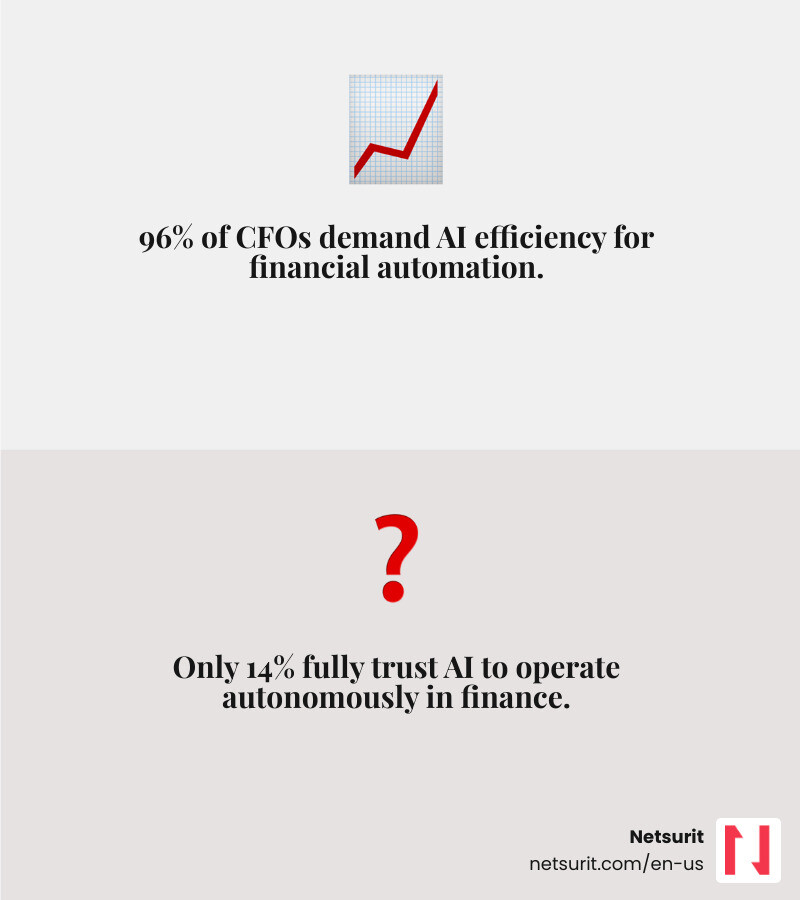
Despite the clear benefits, the path to Accounting AI cash flow Houston excellence has obstacles. The “trust gap” is the most significant: while 96% of CFOs want the efficiency of AI, only 14% trust the technology to run autonomously.
Scaling Accounting AI Cash Flow Houston with Managed IT Support
AI is a resource hog. Whether you are running generative AI prompts to summarize financial reports or using machine learning for forecasting, these tools demand high-performance IT infrastructure. Many Houston firms find that their systems slow down after adopting AI because their network hasn’t been optimized for the increased data load.
To prevent this, a Roadmap for Modern Accounting is essential. This involves:
- Mapping Usage: Identifying which departments are using which AI tools.
- Resource Monitoring: Ensuring AI workloads don’t compete with critical ERP functions.
- Cloud Scaling: Utilizing scalable cloud compute to handle “bursty” AI processing demands.
Bridging the Trust Gap in Financial Automation
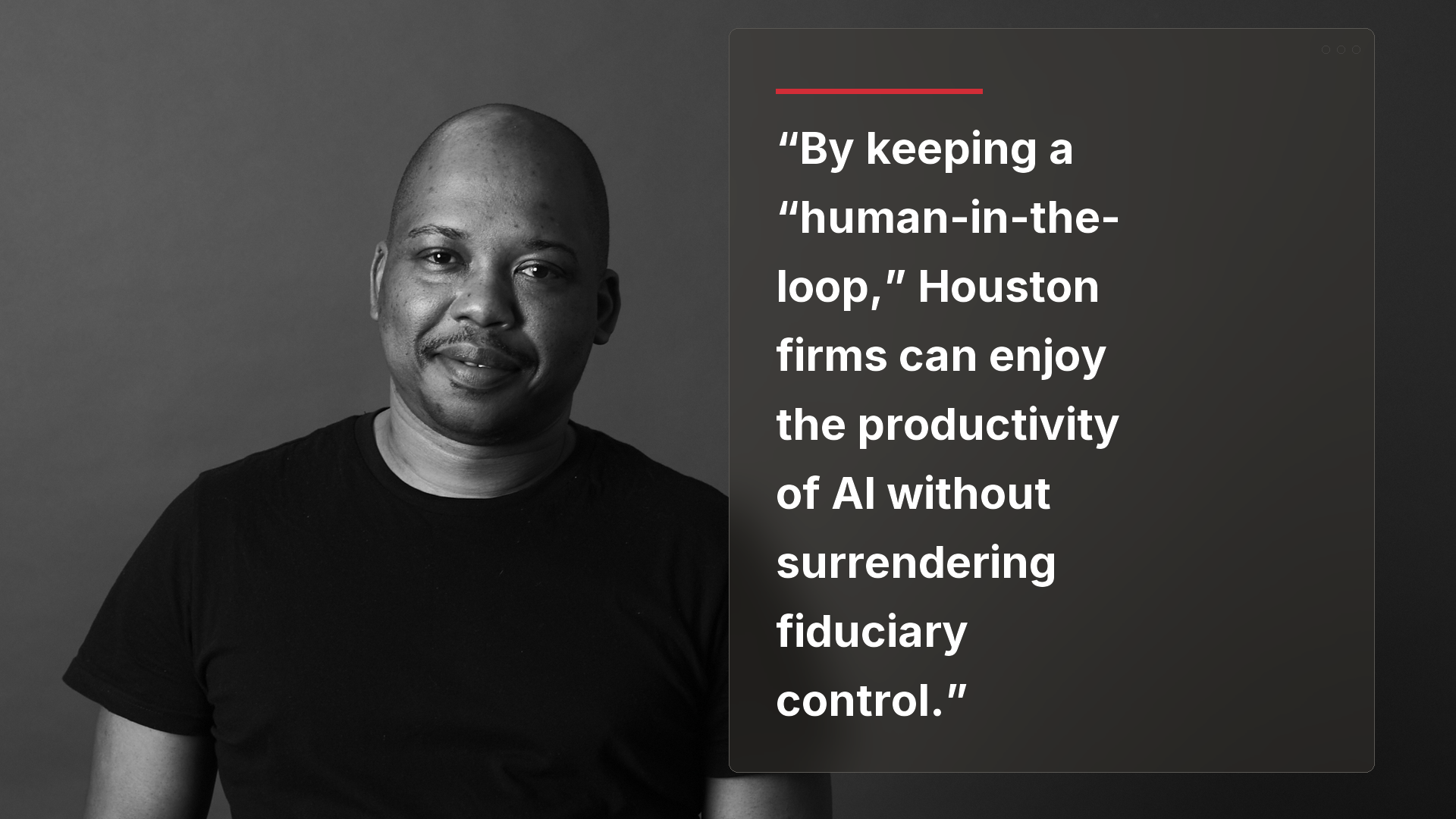
To move from 14% trust to full adoption, firms must implement robust governance frameworks. This means setting “risk guardrails” where AI can suggest actions, but a human CPA must click “approve” for any transaction over a certain dollar threshold. By keeping a “human-in-the-loop,” Houston firms can enjoy the productivity of AI without surrendering fiduciary control.
The Evolving Role of the Houston CPA in 2026
By May 2026, the role of the Houston CPA has fundamentally changed. The days of “ticking and tying” spreadsheets are largely over. Instead, local professionals are becoming “Digital Seniors”—experts who oversee fleets of AI agents.
Shifting from Manual Entry to High-Value Advisory
AI integration saves the average CPA firm between 5 and 10 hours per week, per employee. This time is being reinvested into strategic advisory services. Instead of telling a client what happened last month, Houston CPAs are now using AI “prompt toolkits” to explain what will happen in the next six months.
Events like the S.T.A.R.S. Summit at the Sugar Land Marriott provide Houston professionals with the CPE credits and “prompt playbooks” needed to master these advisory conversations. The focus has shifted from “How do we record this?” to “How do we use this data to grow the business?” (See: How Houston Firms Use AI to Stop Being Bored).
Future Trends: Full-Population Analytics and Real-Time Audits
The most significant trend for 2026 is the move from “audit sampling” to “full-population analytics.” Traditionally, an auditor might look at 5% of transactions to check for errors. With AI, Houston firms can now analyze 100% of a client’s data in real-time. This allows for continuous monitoring of liquidity pressure and margin erosion, flagging issues the moment they arise rather than months later during a year-end review.
Frequently Asked Questions about Accounting AI
How does AI improve cash flow accuracy for Houston businesses?
AI analyzes thousands of data points—including historical payment behavior, market trends, and seasonal cycles—to predict future cash movements. Unlike manual methods, it adjusts its forecasts daily as new data enters your ERP, typically reaching 95% accuracy.
Can AI invoicing integrate with my existing QuickBooks or NetSuite setup?
Yes. Modern AI invoicing tools are designed to layer on top of your existing stack via APIs. This allows data to flow seamlessly between your billing system and your general ledger without requiring a full system migration.
What are the primary risks of adopting AI for cash flow management?
The main risks include data privacy concerns, the potential for “hallucinations” in generative AI, and the “trust gap.” These are mitigated by using SOC 2-compliant tools, implementing strict governance frameworks, and maintaining a “human-in-the-loop” for all final financial decisions.
Conclusion
In the Houston business landscape of 2026, Accounting AI cash flow management is the engine of operational momentum. By automating the mundane tasks of reconciliation and invoicing, firms unlock the ability to predict the future with 95% precision. This isn’t just about saving time; it’s about eliminating the “idle cash” that holds businesses back from their next big expansion.
At Netsurit, we provide the managed IT and cybersecurity infrastructure that makes this level of automation possible. If you’re ready to turn your finance department into a strategic powerhouse, explore our Netsurit IT Consulting Services to build your roadmap.