Why Accounting AI Optimization Is Reshaping Houston’s Financial Landscape
Accounting AI optimization in Houston is no longer a future-state experiment — it’s what separates firms that scale from firms that stall. If you’re a Houston business leader looking to cut manual accounting work, reduce errors, and get faster financial insights, here’s the short answer:
How to optimize accounting with AI in Houston:
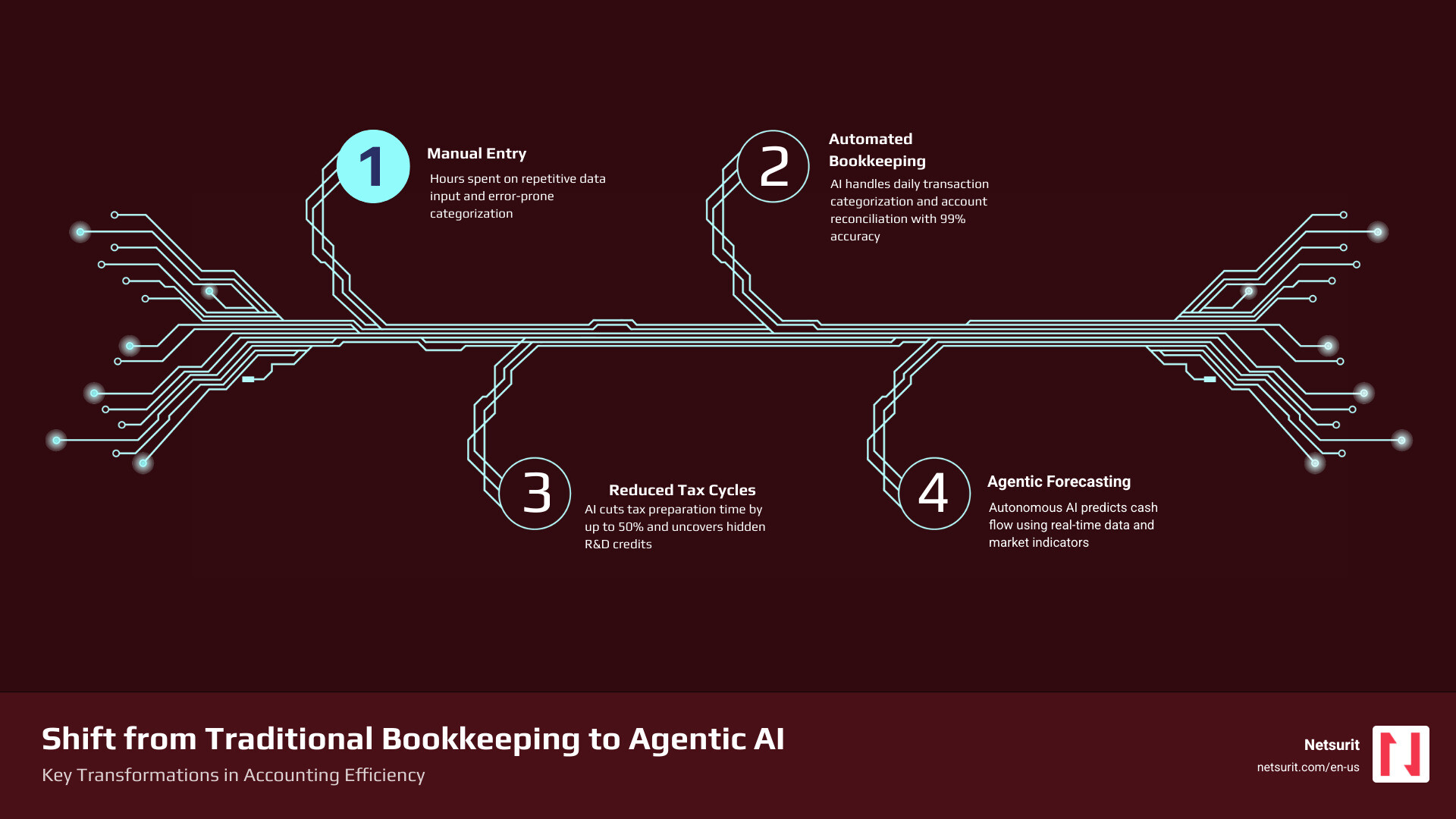
- Automate bookkeeping — AI categorizes transactions and reconciles accounts daily, with no manual data entry
- Accelerate tax prep — AI-powered tools reduce tax cycle times by up to 50% and surface credits like R&D deductions you’d otherwise miss
- Forecast cash flow — Agentic AI pulls from historical data and market indicators to project cash positions in real time
- Detect fraud early — AI flags anomalies across transactions before they become costly problems
- Reduce staff hours on low-value tasks — Organizations report a 30–50% drop in accounting hours worked after automation
Right now, in May 2026, over 76% of finance and accounting leaders already use AI tools to drive efficiency. Yet most Houston SMBs — from Katy service firms to Midtown startups — are still running their books on spreadsheets and disconnected software. That gap is the problem.
The cost of staying manual is real. Slow closes, missed credits, and overworked finance staff are symptoms of a process problem, not a people problem. AI fixes the process.
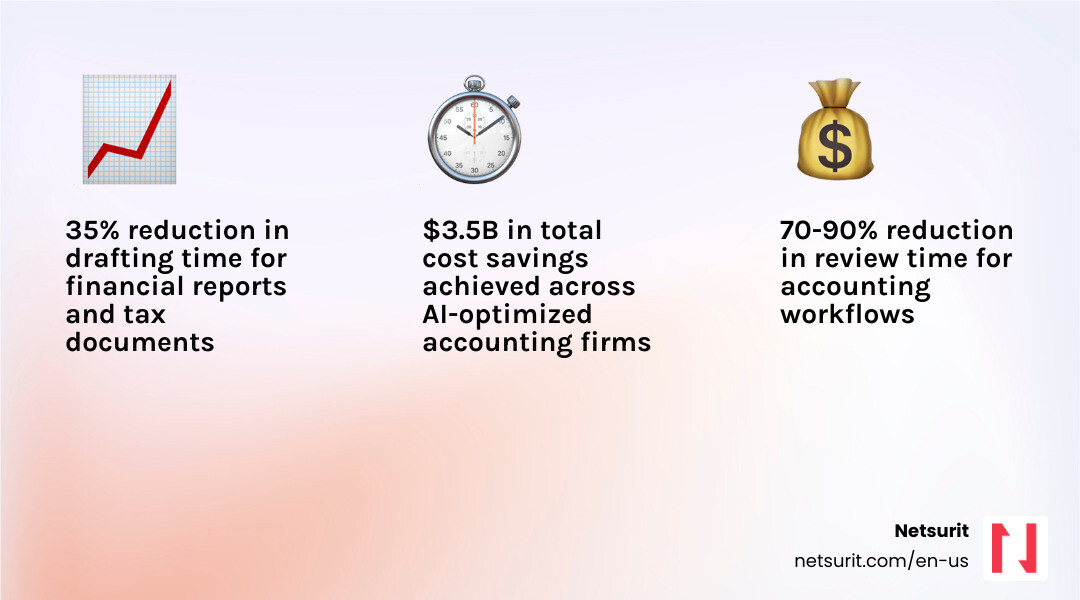
The numbers back this up. Firms using agentic AI — systems that act independently, not just respond to prompts — report cutting accounting staff hours by 30–50%. One global tech firm unlocked $3.5 billion in cost savings and a 50% productivity increase through AI-enabled operations. Houston businesses don’t need to operate at that scale to see meaningful gains.
I’m Orrin Klopper, CEO of Netsurit, and over nearly three decades leading IT and digital transformation for hundreds of businesses, I’ve watched accounting AI optimization in Houston evolve from a niche experiment into a genuine competitive edge. This guide gives you a clear, practical roadmap — no hype, no fluff — for putting it to work in your firm.
The Mechanics of Accounting AI Optimization Houston
To understand Accounting AI optimization Houston, we must look past simple automation. Traditional automation follows “if-this-then-that” rules. Optimization in 2026 uses Agentic AI—systems that don’t just follow recipes but understand the goal of the meal.
When we talk about Ai Accounting Optimization Houston The Future Of Financial Efficiency, we are describing a shift toward real-time data integrity. Instead of waiting for a monthly close to see your margins, AI-native systems update your books every time a transaction occurs.
Transforming Financial Efficiency in 2026
The current standard for financial efficiency relies on autonomous agents. These are specialized AI entities designed for specific workflow execution, such as accounts payable (AP) or multi-entity consolidations.
By deploying these agents, Houston firms typically see a 30-50% reduction in hours spent on reconciliations. For a mid-sized firm in the Energy Corridor, this means your senior accountants stop being “data janitors” and start acting as strategic advisors. AI-powered interfaces allow team members to query complex financial data using natural language, turning hours of report-building into seconds of conversation.
Implementing AI for SMBs in the Houston Metro Area
For small and medium-sized businesses (SMBs) in Sugarland, Katy, or Conroe, the barrier to entry for AI has vanished. You no longer need a Silicon Valley budget to deploy enterprise-grade financial intelligence. The focus for SMBs should be on three core pillars: bookkeeping, tax preparation, and financial reporting.
If you are a growing business, you have likely outgrown your spreadsheets. Disconnected systems create “data silos” where your sales numbers don’t talk to your bank balance. The Ultimate Guide To Houston Ai Accounting Software highlights that the best software for our local market integrates these functions into a single “source of truth.”
Practical Steps for Local Bookkeeping and Tax
- Audit Your Workflow: Identify where your team spends the most time. Is it chasing missing invoices in Conroe? Or manual data entry in Sugarland?
- Adopt AI-Native Invoicing: Move beyond PDFs. Use systems that extract data from incoming bills and verify them against purchase orders automatically.
- Partner with Specialists: Modern “Accounting Intelligence” systems manage over 1 million transactions annually for firms that need to scale without adding headcount.
| Feature | Legacy Bookkeeping | AI-Native Accounting |
|---|---|---|
| Data Entry | Manual/Human Dependent | Automated/AI Extraction |
| Reconciliation | Monthly/Quarterly | Daily/Real-Time |
| Error Detection | Sampling/Manual Review | 100% Transaction Monitoring |
| Reporting | Static/Historical | Dynamic/Predictive |
High-Impact Applications: From Fraud Detection to Agentic AI
The most immediate “win” in Accounting AI optimization Houston is better control over errors, fraud, and cash timing. AI is good at pattern recognition across large transaction sets, which matters when your team is reviewing hundreds or thousands of entries each week.
Take Microsoft Copilot, for example. Houston firms use it to summarize tax guidance, draft supplier emails about payment discrepancies, and speed up internal review. At the same time, accounting AI platforms can scan transaction streams for duplicate payments, unusual vendor behavior, or out-of-pattern journal entries. For baseline context on how machine learning supports anomaly detection, see Machine learning.
A practical example: a Katy construction supplier with three entities can use AI to flag invoice amounts that do not match purchase orders before payment runs go out. That saves controller time and reduces the odds of paying the same vendor twice.
Scaling Accounting AI Optimization Houston for Oil and Gas
Houston remains the energy capital of the world. For upstream and midstream firms, volume and complexity create the real bottleneck. AI helps process joint interest billings, intercompany entries, and audit support work with less manual review. Deploying Ai In Houston A Roadmap For Modern Accounting covers the steps needed to move legacy ERP environments toward AI readiness.
Example: a Conroe oilfield services firm closing books across multiple cost centers can use AI to classify charges, reconcile exceptions daily, and prepare cleaner support for external auditors.
Agentic AI and the Future of Cash Flow Forecasting
Traditional forecasting mostly reports what already happened. Agentic AI takes the next step by monitoring incoming payments, recurring bills, pipeline data, and outside signals to predict shortfalls earlier.
For a Sugarland accounting firm serving seasonal clients, that means seeing a likely cash dip weeks ahead of payroll instead of after the fact. The system can suggest collection follow-ups, payment timing changes, or discount opportunities based on actual account behavior.
Trade-offs of high-impact AI use cases:
- Works best when: your AP, AR, banking, and ERP data feed into one system with consistent naming and clean histories.
- Avoid when: approvals still happen by email and key records sit in disconnected spreadsheets.
- Risks: false positives, overreliance on AI recommendations, and poor forecasts when source data is incomplete.
- Mitigations: set approval thresholds, review exceptions weekly, and keep a human sign-off for material transactions.
Navigating Implementation Hurdles and Data Security
No technology is without its trade-offs. The primary challenge for Houston firms isn’t the AI itself, but the infrastructure it runs on.
Trade-offs of AI Implementation:
- Works best when: Your data is centralized in the cloud and your team is trained on prompt engineering.
- Avoid when: You have “dirty data” (duplicate records, inconsistent naming) that hasn’t been cleaned.
- Risks: System slowdowns due to high compute demands; data privacy leaks if using “open” AI models.
- Mitigations: Use enterprise-grade, “closed” AI environments; perform a hardware readiness assessment before scaling.
Overcoming Technical Debt in Houston Firms
Many businesses find that AI tools actually slow down their systems initially. This is usually due to “bandwidth strain”—AI queries send and receive significantly more data than traditional web traffic.
To audit proof your Texas business, you must first ensure your backend computation can handle the load. We often see firms trying to “bolt on” AI to old servers. Don’t Mess With Texas Algorithms—ensure your IT infrastructure is modernized to prevent performance lags that frustrate your staff.
Strategic Advantages of Houston’s AI-Driven Financial Landscape
Houston’s business environment is unique. With no state income tax but complex franchise taxes and a massive appetite for R&D, the margin for error is thin. AI optimization allows local firms to navigate these specific Texas regulations with higher precision.
Understanding your guide to AI in tax and accounting is essential for maintaining compliance with new global standards, such as Pillar Two requirements, which are increasingly relevant for Houston’s international energy players.
Maximizing R&D Credits with Accounting AI Optimization Houston
One of the most underutilized tools in the Houston market is the R&D tax credit. Many businesses in manufacturing and software development assume they don’t qualify. AI tools can scan thousands of project logs and expense reports to identify eligible activities that humans might overlook.
Specialized “Financial Intelligence” systems help firms capture millions in R&D credits by using AI to rigorously document qualifying expenses. This is “found money” that can be reinvested directly into your company’s growth.
Frequently Asked Questions about Accounting AI
How does AI reduce tax cycle times for Houston firms?
AI reduces tax cycle times by automating data extraction from source documents (like K-1s and 1099s). Instead of a staffer manually typing data into a return, AI pre-fills the forms with near-perfect accuracy. Leading firms report reducing tax prep time by as much as 50%, allowing them to handle more clients during peak season without burning out their teams.
Is Agentic AI safe for sensitive financial data?
Yes, provided it is implemented within a secure, governed framework. At Netsurit, we emphasize using “private” AI instances where your data is never used to train public models. When you combine this with robust encryption and multi-factor authentication, AI-native accounting is often more secure than traditional paper-based or spreadsheet-based systems.
What are the best AI tools for Houston startups?
For startups, we recommend “all-in-one” platforms like Microsoft Dynamics 365 Business Central. These tools scale with you from your first seed round to an IPO. They offer the real-time visibility that venture capital investors demand and the automation that allows a small founding team to stay lean.
Conclusion
The shift toward Accounting AI optimization Houston is an invitation to stop doing the “boring” work. By automating the repetitive, high-volume tasks that traditionally clog up accounting departments, Houston leaders can refocus their energy on strategy, innovation, and growth.
At Netsurit, we provide the managed IT and cybersecurity foundations that make this transformation possible. Whether you are in Katy, Sugarland, or downtown Houston, we act as your elite tech partner to ensure your AI journey is secure, efficient, and profitable. If you’re ready to move beyond the spreadsheet, let’s talk about how we can support your Managed IT Services Houston and AI goals.
What to watch next: Keep an eye on the rise of “Pillar Two” compliance automation. As international tax laws tighten, AI will become the primary tool for managing cross-border tax liabilities in real time.
Next Action: Schedule an AI readiness assessment to identify which of your accounting workflows are most ready for optimization.