Why Houston Accounting Firms Are Turning to AI Solutions Right Now
By April 2026, Houston accounting firms have largely eliminated the 40-hour manual reconciliation week. Thesis: Houston firms are replacing repetitive manual tasks with Agentic AI to reclaim 30% of their billable hours, transforming accountants from “data processors” into “strategic advisors.”
| AI Application | Primary Benefit |
|---|---|
| Automated bookkeeping | 70+ hours saved per month |
| Invoice and AP automation | 90% of invoices processed without manual input |
| R&D tax credit identification | Millions in credits that manual reviews miss |
| Financial close automation | Close cycle cut from 10 days to 3 |
| Agentic AI advisory tools | Forecasts and scenario models ready before client meetings |
Firms across the metro—from Sugar Land to Conroe to Katy—have stopped debating whether to adopt AI. They are now deciding how fast to scale it. Houston faces a shrinking pool of accounting talent and spikes in tax season demand. AI solves the repetitive work—reconciliations, invoice matching, and data entry—allowing staff to focus on high-stakes client judgment.
I’m Orrin Klopper, CEO of Netsurit. We’ve spent nearly three decades helping organizations implement AI solutions accounting practices Houston firms rely on to stay competitive. In this guide, I’ll walk you through how Houston firms deploy these systems and the results they achieve.
Deploying Autonomous Finance in Houston Practices
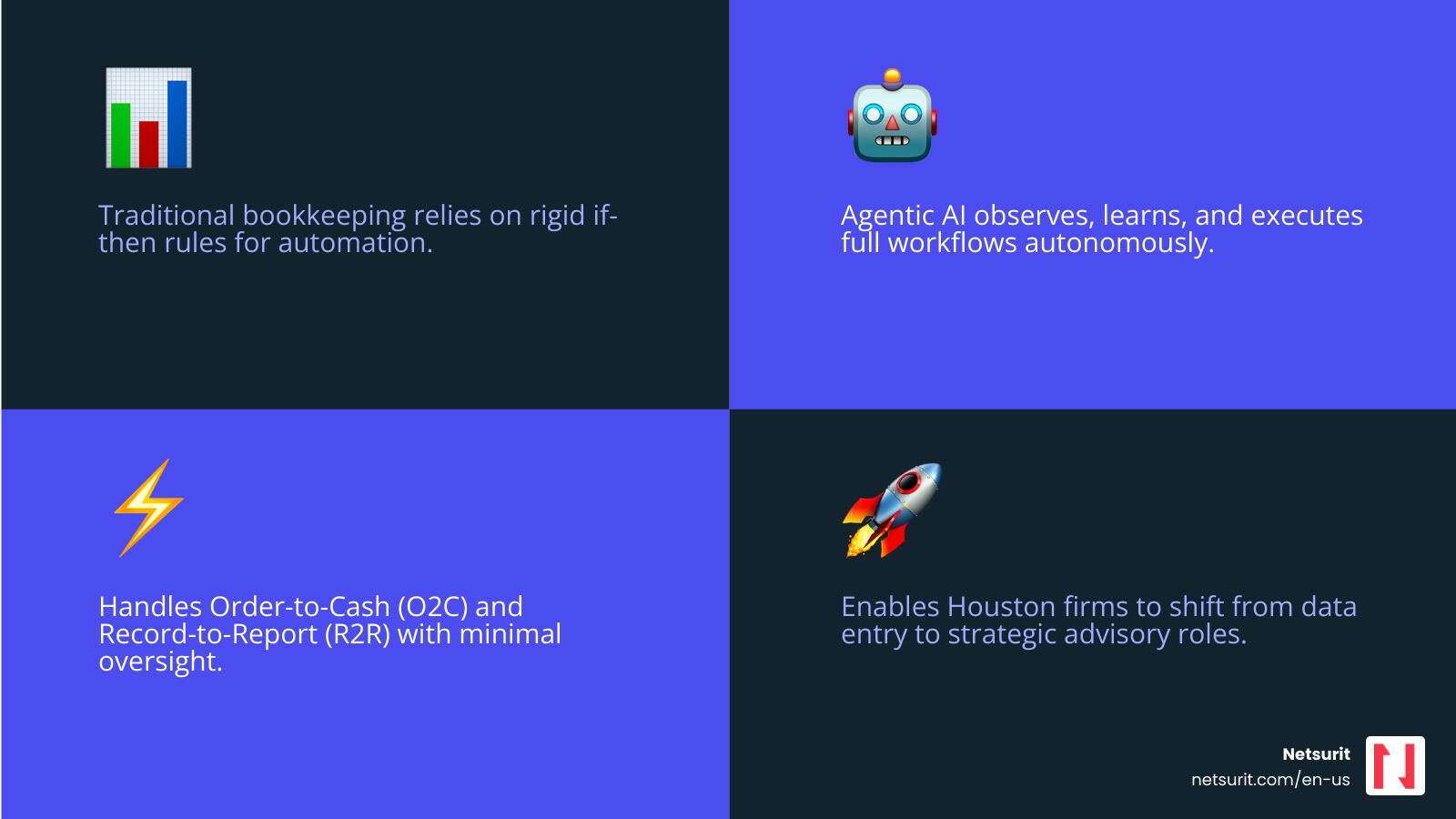
By April 2026, the shift from “automated” to “autonomous” finance has become the standard for high-growth firms in the Houston metro area. While traditional automation follows rigid “if-then” rules, autonomous systems use Agentic AI to observe, learn, and execute entire workflows. In Sugar Land and Katy, financial controllers use these systems to manage Order-to-Cash (O2C) and Record-to-Report (R2R) cycles with minimal oversight.
The efficiency gains are no longer theoretical. Local practices report that AI now automates 90% of invoices, with 80% of transactions being auto-coded directly into the general ledger. This isn’t just about speed; it’s about capital optimization. Automated Accounts Payable (AP) systems have enabled a 3x increase in early payment discount capture, turning the AP department from a cost center into a small revenue generator.
The “so what?” for your practice is clear: firms using these systems reduce the monthly financial close cycle from ten days to just three. This allows Houston business owners to make mid-month strategic pivots based on real-time data rather than waiting for a post-mortem report three weeks late.
| Feature | Manual Data Entry | AI-Driven Autonomous Workflows |
|---|---|---|
| Data Processing | Human-led, prone to fatigue/error | Machine-led, 99.9% accuracy |
| Reconciliation | Monthly batch processing | Real-time, continuous matching |
| Invoicing | Manual entry and verification | 90% touchless automation |
| Cycle Time | 10+ days to close | 3 days or less |
Scaling AI for Houston Small Businesses
You don’t need a “Big Four” budget to access enterprise-grade intelligence. Cloud-based AI solutions accounting practices Houston small businesses use allow boutique firms to compete on insights rather than just price. By adopting comprehensive IT services for your accounting practice, even a solo practitioner in Conroe can offer sophisticated tax optimization.
AI-driven systems now identify an average of $10,000 in federal tax savings per small business client by flagging missed deductions in real-time. Furthermore, automated document tagging ensures that every receipt and invoice is electronically organized, providing built-in audit protection. Moving to a cloud-first, no-contract model allows these smaller firms to remain agile, scaling their tech stack up or down as the Houston energy market fluctuates.
Real-Time Bookkeeping and R&D Credits
The most significant impact of AI in 2026 is the ability to handle massive transaction volumes without adding headcount. AI platforms now process billions in transactions monthly across Houston, maintaining GAAP-compliant financial statements with daily auto-updates.
This real-time visibility is particularly lucrative for the Houston tech and engineering sectors. AI tools can track engineering hours against specific project codes, identifying R&D tax credits that manual audits often overlook. For example, one local tech firm captured $6.5 million in R&D credits simply because the AI identified qualifying activities that were buried in Slack logs and Jira tickets—data a human accountant would never have time to manually sift through.
Solving the Houston Talent Shortage with Agentic AI
Houston faces a significant accountant shortage. Student interest in the field has declined while the complexity of Texas franchise and federal taxes has increased. According to the AICPA, the profession is actively seeking ways to accelerate the talent pipeline. To bridge this gap, local firms are hiring “Digital Seniors”—Agentic AI systems that perform the work of a senior associate.
These agents handle the heavy lifting during the January–April “busy season” crunch, reducing staff burnout. Instead of spending 60 hours a week “ticking and tying” spreadsheets, your junior staff can focus on improving accounting efficiency and managing client relationships.
AI-driven productivity gains in Houston firms:
- 30–50% reduction in total accounting staff hours.
- 40% increase in overall practice productivity.
- 10% reduction in Days Sales Outstanding (DSO) through automated collections.
- Elimination of manual data entry errors in 95% of routine tasks.
Trade-offs of AI Talent Integration
| Feature | Guidance |
|---|---|
| Works best when | Handling high-volume, repetitive tasks like bank reconciliations and automating AR workflows. |
| Avoid when | Managing complex, subjective client advisory or sensitive negotiations requiring high emotional intelligence. |
| Risks | Potential for AI “hallucinations” in tax law interpretation and loss of institutional mentoring. |
| Mitigations | Implement strict governance frameworks and mandatory upskilling programs for staff to audit AI outputs. |
Industry-Specific AI Needs: Energy, Healthcare, and Manufacturing
Houston’s core industries have unique accounting requirements that general AI tools can’t always handle. Success requires IT consulting in Houston that understands local nuances.
- Energy: AI now automates complex joint interest billing (JIB) and depletion allowances, which are notorious for manual errors.
- Healthcare: Firms serving Houston’s medical center use AI to automate patient billing cycles while maintaining strict HIPAA compliance.
- Manufacturing: In Conroe and East Houston, AI is used for real-time inventory forecasting and automating the calculation of the Texas franchise tax.
- Sales Tax: For firms with clients expanding beyond Texas, AI provides automated nexus tracking to ensure compliance with varying state regulations.
Case Study: Conroe Manufacturing Firm
In early 2026, a mid-sized manufacturer in Conroe faced a 40% increase in supply chain complexity due to new international trade regulations. By implementing an Agentic AI system to manage their digital finance transformation, they reduced their financial close time by 30%. Within the first 90 days, the system identified $50,000 in duplicate vendor payments that had slipped through their previous manual system.
Strategic Implementation and Governance
Adopting AI solutions accounting practices Houston firms trust requires strategy, not just a subscription. We use the ACE Method (Complexity, Effort, and Impact) to prioritize automation. Before deploying autonomous agents, conduct a readiness assessment. If your underlying data is messy, AI will simply produce “garbage in, garbage out” results faster.
AI strategy best practices for Houston firms:
- Define Governance: Establish clear policies on who owns AI outputs and how they are verified.
- Start Small: Automate one document-heavy process (like AP) before moving to full autonomous finance.
- Audit for Compliance: Ensure your AI workflows align with SEC rules for financial firms and Texas Identity Theft Laws.
- Invest in Training: Treat training time as a strategic investment, not an overhead cost.
Security for AI-Enhanced Accounting Practices
CPA firms remain a top target for cybercriminals. As you integrate AI, your cybersecurity services in Houston must evolve. AI implementation should always be wrapped in a “Zero Trust” architecture to secure client tax data from ransomware.
Data privacy is the biggest hurdle. You must implement guardrails to ensure your clients’ sensitive financial data isn’t used to train public AI models. For SOC 2 compliance, every AI-generated entry must have a clear, human-readable audit trail. We recommend using encrypted client portals that feed data directly into AI engines, effectively eliminating IT downtime during busy season.
Frequently Asked Questions
How can small Houston firms start with AI without high costs? The most cost-effective way is to utilize AI modules already integrated into your existing cloud accounting software (like QuickBooks or Xero). This avoids the need for outsourcing IT staff for custom development and allows you to pay as you grow.
What training is available for Houston CPAs to learn AI? The University of Houston and various local professional bodies now offer “Certified AI for Accountants” programs. These courses focus on practical skills like predictive analytics, fraud detection with AI, and prompt engineering for financial reporting.
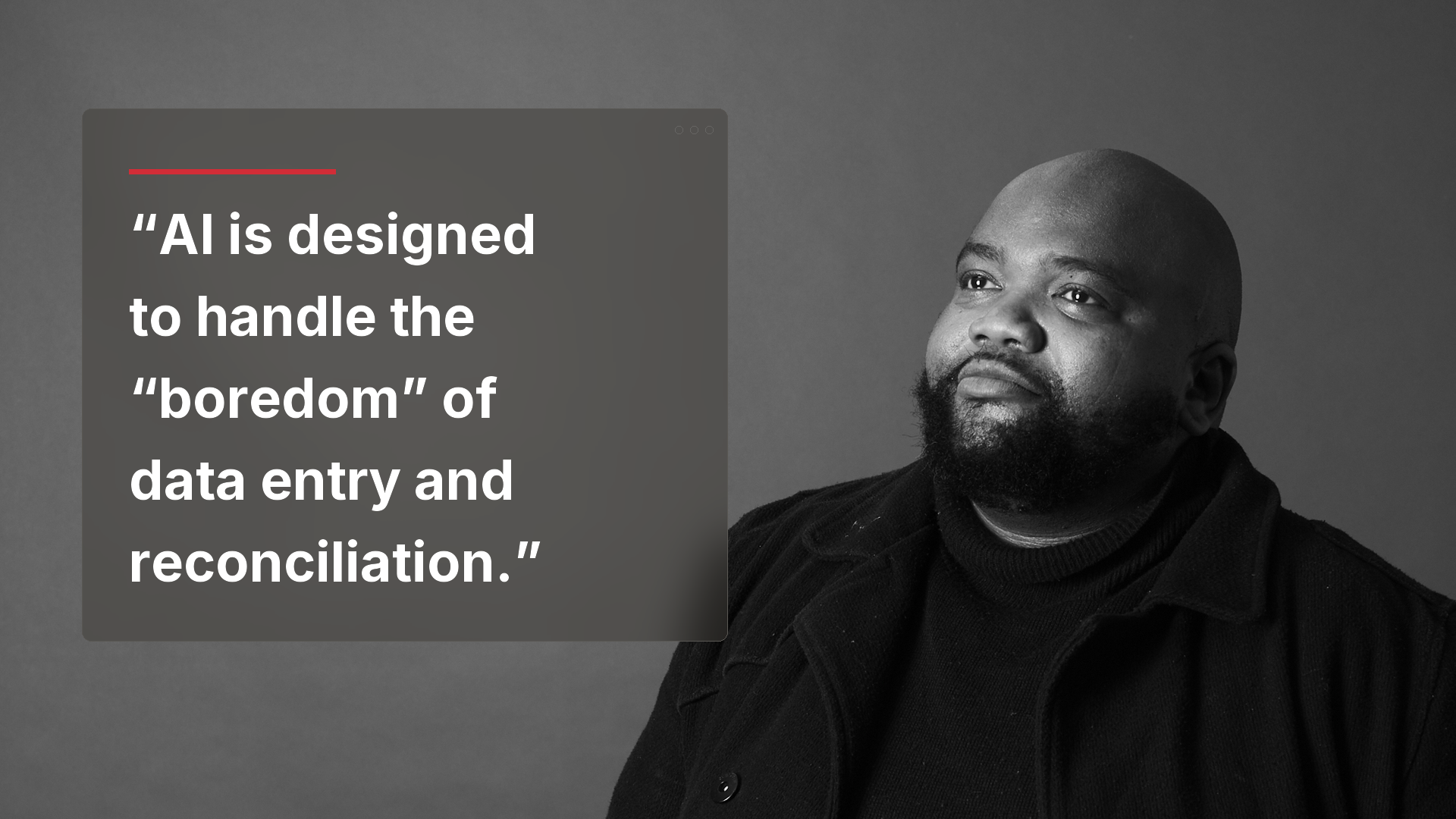
Does AI replace the need for a Houston CPA? Absolutely not. AI is designed to handle the “boredom” of data entry and reconciliation. Human CPAs remain the essential “strategic powerhouse” for capital allocation, navigating complex tax litigation, and providing the high-level advice that builds long-term client trust.
Conclusion
Houston accounting firms that successfully transition to autonomous finance by May 2026 will secure a permanent competitive advantage in a talent-starved market. By automating the routine, you allow your team to focus on the high-value advisory work that clients actually want to pay for. At Netsurit, we provide the managed IT services in Houston and the security frameworks necessary to make this transition seamless.
Next Step: Audit your current manual workflows this week to identify the first three tasks—such as bank reconciliation or invoice entry—ready for AI delegation.