Blog

  • Ultimate Checklist for Global IT Solutions Providers

    Ultimate Checklist for Global IT Solutions Providers

    Defining the Role and Scope of Global IT Services

    A global IT solutions provider runs the systems that keep multi-site businesses operating without interruption. Unlike a local repair shop, these firms handle high-impact work such as Professional IT Services, ERP implementation, Product Lifecycle Management (PLM), and cloud architecture.

    By May 2026, the role has expanded well beyond maintenance. These providers design the platforms, controls, and support models that let a firm in Houston access the same systems as its office in London, with consistent performance and security. The practical benefit is simple: you replace fragmented IT with one operating model that scales.

    Distinguishing Providers from Local MSPs

    A local Managed Service Provider (MSP) is useful for on-site support and day-to-day hardware issues. A global IT solutions provider solves a different problem: complexity across locations, platforms, and compliance regimes.

    • Follow-the-sun support: Teams across the U.S., India, and Europe can provide continuous coverage. When your Houston office closes, another team picks up Managed IT Services work without a handoff gap.
    • Specialized engineering: Large global providers can staff niche expertise in cloud, ERP, AI, and integration work that smaller local firms usually cannot maintain full time.
    • Global reach: They manage connectivity, vendor coordination, and regulatory requirements across multiple countries at once.

    For example, a tax and accounting firm with offices in Houston and Sugar Land may need secure access to client files after hours during filing season. A local MSP can support desktops and printers. A global provider is better suited to run the cloud environment, enforce access controls, and keep support available around the clock.

    Trade-offs of Global Engagement

    Works best when… Avoid when…
    Scaling operations across multiple states or countries. You only have one office and need a technician to physically move cables.
    Requiring deep expertise in SAP, AI, or complex ERPs. Your budget is extremely limited and your IT needs are basic.
    Needing 24/7 proactive security monitoring. You prefer a “break-fix” relationship over a strategic partnership.

    Risks & Mitigations: The biggest risk is cultural or communication misalignment. We mitigate this at Netsurit by providing localized account management in hubs like Houston and Seattle, so you get a local point of contact backed by broader delivery capacity.

    Core Services of a Global IT Solutions Provider

    The best providers focus on one outcome: less downtime and fewer surprises. That means building an IT Strategy that ties security, infrastructure, and application support into one operating model instead of a set of disconnected tools.

    Core offerings typically include:

    1. Cybersecurity and managed SOC: Continuous monitoring through a Security Operations Center (SOC) to detect and contain threats early. The practical advantage of a global SOC is shared threat intelligence. If analysts identify a new ransomware pattern in Europe, your Houston environment can be protected before your staff logs in.
    2. Application development: Building and supporting custom software that fits your workflows. In 2026, that often includes AI-assisted development, integration work, and modernization of aging internal tools.
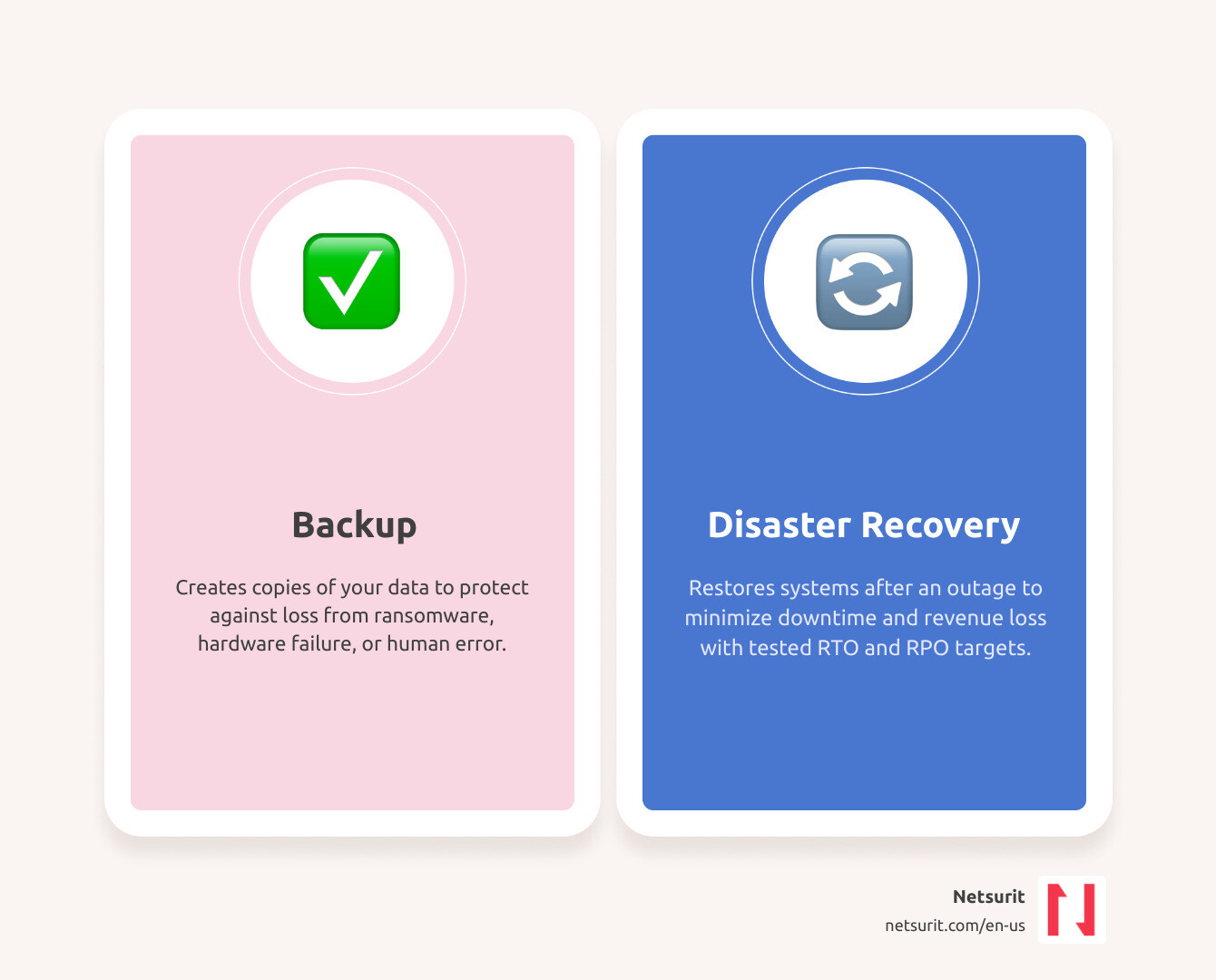
    3. Business continuity: Keeping data available and staff productive during outages, storms, or office disruptions. This usually includes geo-redundant backups and tested recovery procedures across multiple secure locations.

    Scenario: International Tax Compliance in Houston

    Consider a mid-sized accounting firm headquartered in Houston with satellite offices in Sugar Land and Conroe. It manages tax filings for clients with international assets and must align reporting with both US GAAP and international standards.

    • The problem: Staff manually reconcile data across jurisdictions, which slows close cycles and increases error risk. The internal IT team also struggles to secure cross-border data transfers.
    • The global solution: A global provider implements automated IFRS reporting, cutting document processing time by 20%. The provider also sets up encrypted data tunnels and policy controls that support both Texas privacy requirements and international data sovereignty rules.
    • The result: The firm handles more client work without adding headcount, using Large Business IT Services in a way that fits a mid-sized operation.

    Maximizing ROI with a Global IT Solutions Provider

    Many mid-sized businesses underestimate the cost of a small internal IT team. One or two in-house specialists can become a single point of failure, especially during tax season, audits, or employee turnover.

    Infographic comparing internal IT costs versus global outsourcing ROI infographic

    Factor Internal IT Team Global IT Provider
    Talent Access Limited to local hires Global pool of certified experts
    Availability Business hours + “Best effort” Guaranteed 24/7/365
    Cost High (Salary, benefits, training) Predictable monthly OpEx
    Scalability Slow (Must hire/onboard) Resources on demand
    Security Reactive (Firefighting) Proactive (Managed SOC)

    A Katy-based boutique tax firm is a good example. Hiring one security engineer, one cloud admin, and one support lead may be unrealistic. A provider spreads those skills across many clients, which often gives you broader coverage for a lower and more predictable monthly cost.

    Accelerating Digital Transformation with AI and Cloud

    By May 2026, digital transformation is no longer optional for firms with distributed teams, compliance exposure, or tight reporting cycles. A global it solutions provider uses Cloud Services and AI to automate routine work, improve visibility, and reduce the drag of legacy systems.

    One clear shift is toward agentic AI, which means AI systems that complete defined tasks instead of only generating responses. For example, an AI agent can monitor cloud spend across Azure and AWS, flag anomalies, and resize underused resources automatically based on policy. The value is operational, not theoretical: lower waste, fewer manual reviews, and faster decisions.

    Modernizing Legacy Systems for Accounting Firms

    For a tax practice in Conroe, TX, the main blocker is often an old ERP that does not connect cleanly to newer apps. That creates data silos, duplicate entry, and audit headaches.

    • The solution: Migrate to Microsoft Solutions such as Azure and Microsoft 365, with the provider handling data mapping, security controls, and cutover planning.
    • The impact: The firm gains real-time audit trails and stronger document control, both of which matter during reviews and filing periods. Low-code tools can also reduce application development effort by 45%, which helps the firm launch client portals and workflow apps faster.

    A Sugar Land accounting firm can use this model to connect tax prep, document storage, and approval workflows in one environment. That shortens turnaround times and reduces the manual handoffs that usually cause delays.

    As 2027 approaches, three shifts are worth watching:

    • Nearshoring evolution: More delivery work is moving closer to U.S. time zones, including Mexico and Canada. That can improve collaboration speed for firms in Houston, Tacoma, or Seattle.
    • 5G-enabled edge computing: Businesses that need low-latency processing, especially in logistics or manufacturing, will process more data locally instead of sending everything back to centralized systems.
    • Quantum-resistant encryption: Providers are starting to test post-quantum cryptography now. If your provider has no roadmap for it, ask why.

    The trade-off is that newer platforms need governance. AI agents, low-code apps, and multi-cloud environments save time only when you define access rules, approval steps, and rollback plans upfront.

    Selection Criteria and Risk Management

    Choosing a global it solutions provider is a risk decision as much as a technology decision. You are selecting a partner that will influence your Cyber Risk Compliance, uptime, and recovery speed when something goes wrong.

    A weak provider can create two expensive problems: vendor lock-in and uneven security across regions. A strong one gives you clear controls, measurable service levels, and a practical path to scale.

    Evaluating a Global IT Solutions Provider for Security

    Security should be visible and testable. A reputable provider explains which frameworks it follows, how it enforces policy, and what happens during an incident.

    • Zero Trust architecture: Every user and device must be verified, whether they work in a Houston office or from home in Katy. This limits lateral movement if an account is compromised.
    • Multi-factor authentication (MFA): A baseline requirement for all Security Services. In 2026, stronger options include biometrics or hardware keys for higher-risk users.
    • Incident response: Ask for a documented process with named responsibilities and response targets. You need to know how quickly the provider can isolate affected systems, preserve evidence, and restore operations.

    For example, a Houston-area CPA firm handling payroll and tax records should ask for proof of logging coverage, endpoint controls, and backup testing. If the provider cannot show recent reports or explain the escalation path in plain English, that is a warning sign.

    Trade-offs in Provider Selection

    Works best when… Avoid when…
    Compliance (HIPAA, SOC 2) is a legal requirement for your firm. You are looking for the “cheapest possible” option without regard for risk.
    You want a long-term roadmap and IT Strategy. You have a highly proprietary, non-standard tech stack you refuse to modernize.
    You need to scale rapidly across new geographic regions. You prefer to manage all IT decisions at a granular, daily level.

    Risks & Mitigations: The main risk is vendor lock-in, where switching becomes costly or disruptive. To reduce that risk, use Microsoft 365 and multi-cloud approaches where appropriate, and require clear contract terms for data ownership, export rights, and transition support.

    Frequently Asked Questions about Global IT

    How do global providers handle local compliance like HIPAA?

    Global providers use specialized compliance-as-a-service models. They map international standards to local requirements (like HIPAA for healthcare firms in Texas or GDPR for European branches), ensuring that data storage and access meet US federal laws regardless of where the support team is located. This includes signing Business Associate Agreements (BAAs) and ensuring all support staff are trained on specific US privacy regulations.

    What is the typical onboarding timeline for enterprise solutions?

    For standard Managed IT Services, onboarding typically takes 30 to 90 days. This period includes a full audit of your existing infrastructure, security hardening, and staff training. Complex ERP migrations or global cloud deployments can take 6 to 12 months, depending on the volume of data and the number of global locations involved. A phased approach is usually recommended to minimize business disruption.

    Can a global provider support small boutique firms in Katy, TX?

    Yes. Many global providers offer Small Business and Non-profit IT Services that provide “enterprise-grade” security and cloud tools at a scale that fits a smaller headcount. This allows boutique firms to “punch above their weight class” technologically, using the same AI and cybersecurity tools as Fortune 500 companies without the Fortune 500 price tag.

    What happens if the global provider’s international office goes offline?

    Top-tier providers use a redundant delivery model. If a service center in one region experiences an outage (due to weather, political instability, or technical failure), traffic is automatically rerouted to another global hub. This is the core benefit of the “Follow-the-Sun” model—your support is never dependent on a single geographic location.

    Conclusion

    Partnering with a global it solutions provider is about more than just outsourcing; it’s about gaining a strategic ally that can help you scale, secure your assets, and innovate with AI. At Netsurit, we focus on helping you achieve your “Dream 20” — your most ambitious business goals — by removing the technical friction that holds you back.

    Whether you are an accounting firm in Houston or a growing mid-sized business in Seattle, the right technology partner will turn IT from a cost center into a momentum-builder. The checklist is clear: prioritize security, demand scalability, and ensure your provider has the global reach to match your aspirations. Explore Our Services to see how we can support your journey toward a more resilient and innovative future.

  • An Essential Guide to Airtel Cybersecurity

    An Essential Guide to Airtel Cybersecurity

    Securing Houston Tax Firms with Managed Security Solutions

    Tax and accounting firms in the Houston metro area—from downtown high-rises to offices in Sugar Land and Katy—handle massive volumes of sensitive financial data. By May 2026, the risk of data breaches has escalated, with organizations losing an average of INR 12.8 crores per leak in regions where many back-office operations reside. For a Houston-based firm, a breach results in more than just a fine; it causes a total loss of client trust.

    Netsurit helps firms mitigate these risks by integrating enterprise-grade tools like airtel cyber security through the Airtel Secure Internet framework. This solution bundles high-speed leased line connectivity with security features from Fortinet. Instead of managing a separate firewall appliance, your business receives a unified service that includes:

    • Next-Generation Firewall (NGFW): Filters traffic based on application-level intelligence.
    • Intrusion Prevention Systems (IPS): Automatically blocks known attack patterns before they reach your local network.
    • Content Filtering: Prevents employees from accidentally visiting phishing sites or malware distribution points.

    By integrating these tools into the Network Security layer, firms can reduce malware infections by up to 95%. This is vital for tax professionals who must comply with stringent data privacy regulations while maintaining 99.5% network uptime.

    Defending Against Ransomware in Professional Services

    Ransomware remains the most significant threat to professional services. Attackers use sophisticated phishing campaigns or exploit zero-day vulnerabilities to gain a foothold. In the Houston area, Cybersecurity Services in Houston have seen a surge in “living-off-the-land” attacks where hackers use legitimate system tools to hide their tracks.

    Netsurit utilizes behavioral monitoring to mitigate these threats. If a workstation in your Conroe office suddenly starts encrypting files at 2:00 AM, the system flags it immediately. While no tool is a silver bullet, businesses using comprehensive security reporting see 70-95% fewer successful attacks.

    Scaling Infrastructure Safely

    Growth should not compromise safety. Whether you are a small practice in Conroe or a growing mid-sized firm in Sugar Land, scaling your digital footprint requires flexible bandwidth. Airtel Secure Internet provides options ranging from 2 Mbps to 1 Gbps, allowing you to scale as your data needs grow.

    Because the security is cloud-native or integrated into the edge, you do not need to buy new hardware every time you upgrade your speed. This “secure-by-design” approach ensures that as you add more cloud applications or remote workers, your Cyber Security Solutions – Airtel scale alongside you without creating new gaps in your perimeter.

    Real-Time Threat Detection via the Secure Intelligence Centre (iSOC)

    A security tool is only as effective as the team watching it. Netsurit leverages the Secure Intelligence Centre (iSOC) to act as a digital war room for our clients. This facility employs over 80 certified security professionals (holding CISSP and CISM credentials) who monitor more than 90,000 endpoints 24/7.

    The iSOC analyzes over 8,000 security events daily. This scale is necessary because threats move at machine speed. For example, when Sugar Land leaders said city was hit with a cyber event, it highlighted how even well-prepared entities face significant downtime. A Fully Managed Cybersecurity model aims to catch these events in the reconnaissance phase before they become extinction-level events for a business.

    Proactive Incident Response

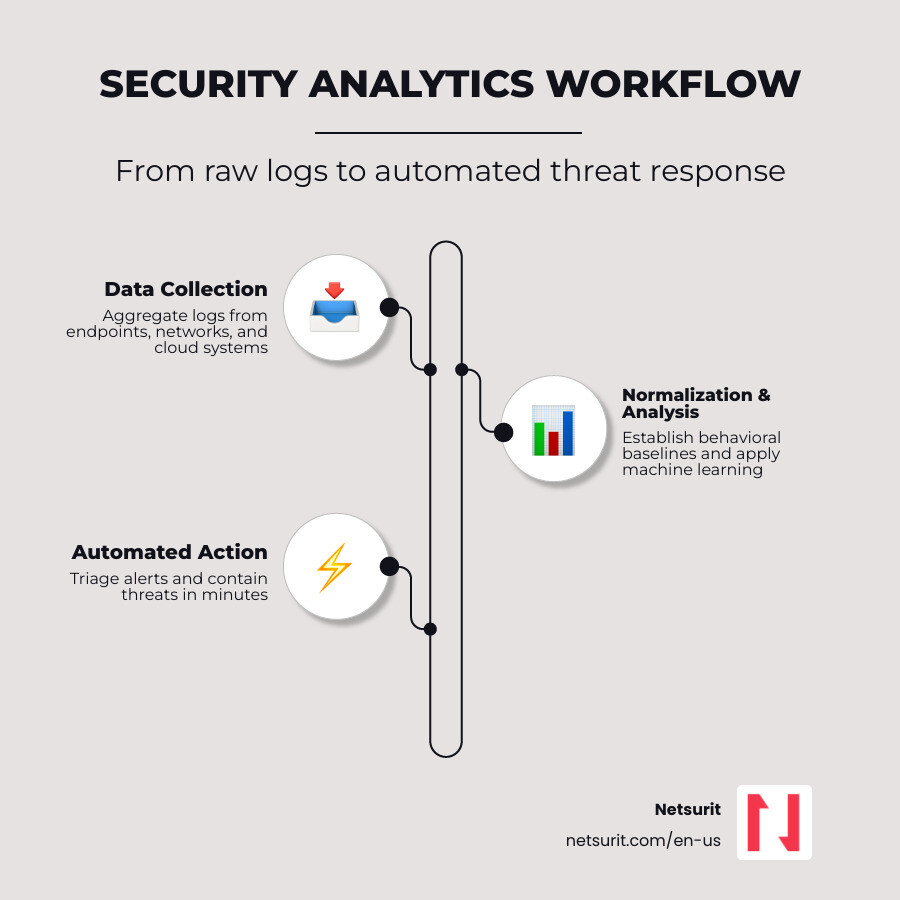
    Netsurit utilizes AI and Machine Learning (ML) to power Security Orchestration, Automation, and Response (SOAR) workflows. When a threat is detected, the system can automatically isolate an infected device or block a malicious IP address across the entire network.

    This automation leads to:

    • 80% faster incident response times compared to manual intervention.
    • 70% better threat detection accuracy by filtering out the noise of false positives.
    • 5-minute threat detection SLAs for critical infrastructure.

    Understanding Why is Network Security Important? becomes clear when you realize that human analysts alone cannot keep up with the volume of modern attacks.

    Critical Infrastructure Protection

    This expertise is proven in high-stakes environments. A notable case study involves the Numaligarh Refinery Limited, where proactive threat detection strengthened IT security against Advanced Persistent Threats (APTs). For businesses in the Houston energy corridor, this level of industrial-grade Cybersecurity is the gold standard for protecting operational technology (OT) and corporate IT networks alike.

    Strategic Alliances: Enhancing Defense with Zscaler and Fortinet

    Netsurit integrates “best-of-breed” technology into the airtel cyber security ecosystem by leveraging global partnerships. This includes collaborations with Cisco for network architecture, Radware for DDoS scrubbing, and Fortinet for edge security.

    The partnership with Zscaler is particularly significant for firms adopting a Zero Trust architecture—the principle that no user or device should be trusted by default, even if they are inside the network. Together, they launched the AI & Cyber Threat Research Center to advance cyber resilience.

    AI & Cyber Threat Research Center

    This center leverages Zscaler’s ThreatLabz, which processes over 500 billion daily transactions. By analyzing millions of infiltration attempts each month, the system pushes real-time threat intelligence to customers. This ensures that local threats, such as regional geopolitical phishing campaigns, are identified and blocked faster than a global-only provider might manage.

    Integrated Security Architecture

    For a business, this means you get a “single pane of glass” view. Through API integrations, Netsurit connects these security layers with your existing multi-cloud environments (AWS, Azure) and on-premises hardware. This prevents security silos where a threat is blocked on your email but remains active on your cloud server. Using Cyber Security Consulting to map these integrations is a critical step in building a modern defense.

    Trade-offs of Integrated Strategic Alliances:

    • Works best when: You need to consolidate multiple security vendors into a single managed framework.
    • Avoid when: You have a highly customized, legacy environment that resists API-based orchestration.
    • Risks: Reliance on third-party updates; if a partner has an outage, certain features may lag.
    • Mitigations: Netsurit provides 24/7 support to manage these vendor relationships and ensure redundancy.

    Managed SOC Services: Balancing Compliance and Operational Costs

    Building an internal Security Operations Center (SOC) is prohibitively expensive for most Houston businesses. Between hiring Tier 1-3 analysts and purchasing SIEM (Security Information and Event Management) software, costs can easily exceed $300,000 to $600,000 annually.

    Netsurit’s managed approach allows businesses to move from a Capital Expenditure (CapEx) model to an Operational Expenditure (OpEx) model.

    Feature In-house SOC Managed SOC (Netsurit/Airtel)
    Setup Cost High (Hardware, Software, Talent) Low (Pay-per-use model)
    Staffing Hard to find/retain 24/7 experts 80+ certified professionals included
    Cost Savings Baseline 30-40% reduction in total cost
    Compliance Manual reporting Automated HIPAA, GDPR, PCI-DSS reports
    Threat Intelligence Limited to internal data Global intelligence (Zscaler, Radware)

    Industry-Specific Compliance

    For industries like BFSI (Banking, Financial Services, and Insurance) and Healthcare, compliance is not optional. The managed iSOC maintains ISO27001, SOC1, and SOC2 certifications. It helps Houston-area firms with international branches stay compliant with HIPAA and PCI-DSS by providing encrypted logs and full audit trails. This level of Fully Managed Cybersecurity ensures that you are always audit-ready.

    Unified Visibility and Reporting

    One of the biggest headaches in security management is dashboard fatigue. Netsurit solves this by providing a single portal for all security metrics. You can track KPIs, monitor network health, and download compliance reports from one place. This unified visibility is a core recommendation we make during Cyber Security Consulting engagements to ensure leadership can see the ROI of their security spend.

    Statistics showing 60% reduction in audit preparation costs with managed SOC infographic

    Frequently Asked Questions about Managed Cyber Security

    How does the system protect against zero-day attacks?

    The security stack uses behavioral analysis and ML-based correlation. Instead of looking for a known signature of a virus, it looks for suspicious behavior—like a program trying to access restricted system files. By combining this with global threat intelligence, it can identify and stop exploits that have never been seen before.

    What are the benefits of the Airtel-Zscaler partnership for enterprises?

    This partnership brings Zero Trust security to a massive scale. It allows businesses to adopt AI-driven defenses that protect against nation-state espionage and sophisticated phishing. For enterprises, it means faster access to Zscaler’s global “Secure-by-Design” architecture through a high-speed network.

    Can these cybersecurity solutions integrate with existing multi-cloud environments?

    Yes. The architecture is designed for the hybrid world. It uses API-based integrations to connect with AWS, Azure, and private cloud setups. This ensures that your security policies are consistent whether your data is sitting in a local server in Houston or a cloud data center elsewhere.

    Conclusion

    Navigating the airtel cyber security landscape requires a balance between advanced technology and human expertise. These solutions offer a compelling suite for businesses that need to scale quickly while maintaining high compliance standards. However, the true value of any security solution lies in how well it is integrated into your daily operations and long-term business goals.

    At Netsurit, we specialize in helping businesses in Houston, Sugar Land, and beyond navigate these complex choices. As an elite tech partner, we provide the managed IT, cybersecurity, and AI solutions necessary to crush downtime and unlock your business momentum.

    Secure your business with expert cybersecurity services and let us help you build a resilient digital future.

  • How to Pick the Right Android Game Development Company

    How to Pick the Right Android Game Development Company

    Hiring an Android Game Development Company: What You Need to Know Before You Sign Anything

    Choosing the right android game development company is one of the most consequential decisions you’ll make for your game project — and one of the easiest to get wrong.

    Quick answer: How to find the right Android game development company

    What you need What to look for
    Full game from scratch Full-cycle studio with Unity/Unreal experience and post-launch support
    Specific feature (AR, multiplayer) Niche specialist with proven shipped titles in that area
    Extra dev capacity Staff augmentation or co-development model
    Budget confidence Fixed-milestone contracts, not open-ended hourly billing
    Quality signal Verified reviews on Clutch or GoodFirms + live store links in portfolio

    Here is why this decision matters right now. The global mobile gaming market is on track to reach $211.8 billion in 2026, and Android drives the majority of that — holding over 70% of the global mobile OS market share. That scale means more studios competing for your budget, more marketing claims to sort through, and more risk if you pick the wrong partner.

    The core problem isn’t finding a studio. There are over 1,190 listed on major directories alone. The problem is shortlisting one that fits your specific scope, timeline, and technical requirements — without getting dazzled by a polished pitch deck and a portfolio that doesn’t match your genre.

    This guide cuts through that noise. It gives you a practical framework to evaluate studios by service depth, technical discipline, review quality, and contract structure — so you make a decision you can defend.

    I’m Orrin Klopper, CEO and co-founder of Netsurit, a global IT services and digital transformation company, and I’ve spent over 30 years helping business leaders make smarter technology decisions — including evaluating external development partners in the mobile and android game development company space. In the sections ahead, I’ll walk you through exactly how to build a shortlist, score your options, and avoid the mistakes that derail most projects before a single line of code ships.

    Infographic showing the 5-step Android game development company selection process: define scope, score studios, audit

    Start with the right hiring model, not the flashiest portfolio

    We often see businesses get distracted by a studio’s high-fidelity trailers before defining how that studio will actually work with their team. The “flashiest” portfolio does not guarantee a smooth delivery. You need to decide if you are hiring a partner to handle the entire project lifecycle or if you just need a few expert hands to fill a gap.

    When an android game development company is the right choice

    A full-cycle android game development company is your best bet when you have a vision but lack an internal production team. These partners handle everything: concept art, engineering, Quality Assurance (QA), and even the labyrinthine process of Google Play Store submission.

    For example, a tax firm in Sugar Land, Texas, looking to build a gamified “Tax Prep Academy” app would benefit from a full-cycle partner. They don’t just need code; they need game designers to make the learning fun, artists to create a friendly UI, and LiveOps experts to update content as tax laws change. A full-cycle partner ensures these elements talk to each other from day one.

    When to choose a niche studio or staff augmentation instead

    Sometimes, you don’t need a whole village. If you already have a core team but lack specific expertise—say, in ARCore for an augmented reality feature or Unreal Engine 5 for high-end graphics—a specialized niche studio or staff augmentation is more efficient.

    Imagine a mid-sized accounting practice in Conroe, Texas, that already has a mobile app but wants to add a 3D data visualization “mini-game.” Hiring a full-cycle studio would be overkill. Instead, they should look for a team of Unreal Engine specialists who can “bolt on” to their existing project.

    Works best when, avoid when, risks, mitigations

    • Works best when: Your project scope is well-defined, and you have clear milestones for delivery.
    • Avoid when: You have no internal product owner to manage the vendor relationship, leading to “ship and forget” syndrome.
    • Risks: Vendor lock-in (where only they can update the code) and timeline creep due to poor communication.
    • Mitigations: Ensure you own the source code in the contract and insist on using industry-standard tools like Unity or Unreal Engine so another team can take over if needed.

    Compare companies using a scorecard you can defend

    Choosing a partner shouldn’t be a gut feeling. You need a scorecard. We recommend weighting your criteria based on what actually drives success: technical depth, communication, and post-launch stability.

    Criteria Full-Cycle Partner Specialized Studio
    Project Ownership High (Handles Concept to Launch) Low (Focuses on specific tasks)
    Technical Depth Broad (Art, Code, Backend, QA) Deep (Experts in one niche)
    Cost Structure Usually Milestone-based Often Hourly or T&M
    Post-Launch Full Support & LiveOps Limited to handoff

    How top firms are ranked in 2026

    In 2026, rankings are no longer just about who has the biggest marketing budget. Verified review platforms like GoodFirms and Clutch now prioritize “Retention Outcomes” and “Google Play Readiness.” A company that has 200+ completed projects and over 1.5 billion total installs is a safer bet than a newcomer with one viral hit. You can find detailed rankings for regional experts here: Top 10+ Game Development Companies in Texas – 2026 Reviews.

    Shortlist examples: Cubix, SDLC Corp, Juego Studios, iLogos

    Several names consistently rise to the top of the android game development company market.

    • Cubix is known for its massive scale, having delivered over 1,300 projects globally since 2008.
    • SDLC Corp offers a broad range of services, making them a “one-stop shop” for enterprise-grade mobile solutions.
    • Juego Studios differentiates itself through technical optimization, using tools like Unity’s DOTS to ensure games run smoothly on older Android hardware.
    • iLogos Game Studios brings a massive track record, with over 1.5 billion installs across their portfolio.

    A CPA firm in Katy, Texas, looking to build a high-stakes “Financial Simulator” would likely look at Juego Studios for their optimization depth or SDLC Corp for their enterprise-focused security standards.

    How to audit reviews and portfolios without getting fooled

    Don’t just look at the screenshots. Follow these steps to audit a portfolio:

    1. Check Live Links: If the game isn’t on the Google Play Store anymore, ask why.
    2. Verify DAU Claims: Use third-party tools to see if the “millions of downloads” claim holds up.
    3. Look for Genre Match: If you want a multiplayer strategy game, don’t hire a studio that only builds hyper-casual puzzle games.
    4. Reference Calls: Ask to speak with a current client, not just a past one.

    Check service depth before you check price

    Price is a vanity metric; service depth is a sanity metric. If an android game development company can’t explain their QA automation or how they handle Android’s massive device fragmentation, their low price will eventually cost you double in bug fixes.

    Services every serious android game development company should offer

    A professional studio must provide more than just coding. They should offer:

    • Game Design & Prototyping: Validating the “fun factor” before building.
    • Art Pipeline: 2D/3D modeling using Blender or Maya.
    • Multiplayer Backend: Using AWS, Firebase, or PlayFab for stable connectivity.
    • Compliance: Ensuring the game meets the latest Google Play safety and privacy standards. For a deeper dive into what these services look like, check out Android Game Development Services.

    How companies differentiate beyond “we build 2D and 3D games”

    Top-tier firms differentiate through their process. Some, like Cubix, focus on sheer scale and speed. Others, like Juego Studios, focus on “aggressive memory management” to ensure a game runs at a stable 60 FPS even on mid-tier devices.

    A Houston-based CPA firm might value a partner that offers “transparent delivery processes”—meaning they get access to the Jira board and can see daily progress—over a studio that works in a “black box” and only emerges every two months with a build.

    Full-cycle partner vs specialist studio: what changes after launch

    The real work starts after the “Publish” button is pressed. A full-cycle partner usually stays on for LiveOps—managing content updates, balance tuning, and responding to store reviews. A specialist studio might hand off the code and wish you luck. If you don’t have an internal team to handle crashes and player feedback, the full-cycle model is the only way to protect your investment.

    Verify the technical stack and performance discipline

    Android development is harder than iOS because of fragmentation. There are thousands of different screen sizes, chipsets, and RAM configurations. Your android game development company must have a rigorous technical discipline to handle this.

    The tools top Android studios use in 2026

    In 2026, the standard stack includes:

    • Engines: Unity (Universal Render Pipeline) and Unreal Engine 5.
    • AI Assistants: Using Claude, GitHub Copilot, and ChatGPT to speed up boilerplate coding and asset generation.
    • Backend: Firebase for analytics and PlayFab for multiplayer lobbies.
    • Performance: Vulkan API for high-end graphics and ADPF (Android Dynamic Performance Framework) for thermal management.

    How studios prevent lag, crashes, and thermal throttling on Android

    To prevent your game from turning a user’s phone into a space heater, studios must use:

    • Android GPU Inspector (AGI): To find where the graphics bottlenecks are.
    • LOD (Level of Detail) Scaling: Reducing polygon counts for objects that are far away.
    • ASTC Texture Compression: Keeping file sizes small without losing visual quality.
    • Thermal Management: Using ADPF to tell the game to scale back performance before the device throttles the CPU. You can see Google’s official stance on these tools at the Develop Android games Developer center.

    What to watch next: AI workflows and Google Play Games on PC

    The biggest shift in 2026 is the expansion of Android games to the PC via Google Play Games. This requires developers to optimize for mouse and keyboard input, not just touch. Furthermore, AI is now being used for “Procedural Content Generation”—meaning a studio can build a game with 1,000 levels for the price of 100.

    An accounting app in Sugar Land could use these AI workflows to create personalized “Financial Quests” for users, dynamically generating challenges based on their specific spending habits.

    Price the project by risk, not just hours

    We recommend looking at project costs through the lens of complexity. A “simple” game with a buggy backend is more expensive in the long run than a well-architected game with a higher upfront cost.

    Typical pricing ranges and what changes the budget

    While we won’t list specific dollar amounts, the primary cost drivers are:

    • Genre: A multiplayer RPG is significantly more expensive than a 2D puzzle game.
    • Art Scope: 3D high-fidelity assets take much longer to produce than 2D sprites.
    • Backend Load: Real-time matchmaking and global leaderboards require ongoing server costs and complex engineering.
    • Region: Studios in Texas will have different overhead than offshore teams, though local partners often provide better communication and legal protection.

    Questions to ask before you sign a statement of work

    Before you sign, get clear answers on these:

    1. Who owns the IP? (It should be you).
    2. What is the device support matrix? (Which specific Android phones will be tested?).
    3. What is the SLA for post-launch bugs?
    4. Do I have access to the source code repository (Git)?

    Red flags that usually predict missed deadlines

    Watch out for “Yes Men.” If a studio says they can build a “Call of Duty” clone in three months for a tiny budget, they are lying. Other red flags include:

    • No dedicated Project Manager or Producer.
    • Vague QA plans that don’t mention physical device testing.
    • A “Conroe tax practice” example: If a studio can’t explain how they’ll handle high-traffic periods (like tax season), they likely haven’t thought about backend scalability.

    Make the final decision with a practical shortlist

    Your final decision should be based on a weighted scoring system. Give points for technical fit, cultural alignment, and their performance on a “Paid Discovery” phase.

    Your 30-day process to choose the right android game development company

    • Days 1-7: Define your Requirements Brief and send out RFPs.
    • Days 8-14: Review vendor demos and shortlist the top three.
    • Days 15-21: Conduct technical interviews with their lead developers.
    • Days 22-30: Run a “Pilot Sprint” or paid prototype phase to see how they work in real-time.

    Final recommendation for businesses that need reliability over hype

    Choose the partner that talks more about your business goals and less about their “revolutionary” engine. A reliable android game development company will be honest about what can’t be done within your budget and will offer a roadmap that prioritizes a stable Minimum Viable Product (MVP) over a feature-bloated failure.

    Next step if you need outside technical guidance

    At Netsurit, we don’t just fix servers; we act as an elite tech partner to help you navigate complex digital transformations. If you are struggling to vet an android game development company or need a second set of eyes on a technical architecture, we can help. We provide the cybersecurity, AI strategy, and managed IT oversight that ensures your external projects don’t create internal headaches.

    For more information on how we help businesses in Houston, New York, and beyond scale their technology safely, visit our managed IT services page.

  • Accounting automation services Houston for the Modern Business

    Accounting automation services Houston for the Modern Business

    Houston Businesses Are Losing Money to Manual Accounting — Here’s the Fix

    Accounting automation services in Houston give local businesses a direct path to faster closes, lower costs, and fewer errors — without adding headcount.

    Quick answer: What do accounting automation services in Houston do?

    What You Get Practical Result
    Automated invoice processing Cuts cost per invoice from $40+ to a fraction
    AI-powered bookkeeping Reduces manual work by 70+ hours per month
    Automated payroll integration Achieves 99% payroll accuracy
    Month-end close automation Closes books in 5-7 days vs. 3 weeks
    AP workflow automation Cuts operational costs by up to 92%
    Outsourced + software blended model Delivers 30-70% total cost savings

    Manual data entry is no longer sustainable for Houston’s high-growth sectors. As of May 2026, firms across the energy corridor, SaaS market, and manufacturing belt of Southeast Texas face rising labor costs and a shrinking margin for error — yet many still rely on spreadsheets and manual reconciliations that consume hundreds of staff hours per year. The case for automation is blunt: AP handling time drops by up to 81%, operational costs fall by as much as 92%, and skilled CPAs get redirected to work that actually requires judgment.

    That said, automation is not a plug-and-play fix. It requires the right software stack, clean data processes, and an IT infrastructure that can support secure, always-on financial systems. Get those three things right, and the ROI is measurable within months. Get them wrong, and you inherit new failure points on top of the old ones.

    I’m Orrin Klopper, CEO and co-founder of Netsurit — a global IT services and digital transformation company that has spent nearly 30 years helping businesses modernize their technology foundations, including the infrastructure that makes accounting automation services in Houston run reliably and securely. From that experience, this guide gives you a clear, practical framework for choosing, implementing, and securing the right automation tools for your Houston business.

    Key benefits and cost savings of accounting automation services in Houston infographic

    Scaling with Accounting Automation Services Houston

    Essential Drivers for Houston Businesses

    In the Houston market, waiting 20 days for a “post-mortem” financial report is a competitive disadvantage. By May 2026, the most successful firms in Southeast Texas have moved toward real-time financial visibility. Automation eliminates the high-volume, repetitive chores—like manual bank reconciliations and two-way purchase order matching—that cause professional burnout.

    When you automate, you aren’t just buying software; you are buying back time. Local firms using these systems can now process over 1 million transactions annually with minimal human intervention. This allows your team to stop being data entry clerks and start being financial strategists.

    Industry-Specific Benefits in Southeast Texas

    Different sectors in Houston face unique financial hurdles that automation is uniquely qualified to solve:

    • Oil & Gas: Automation manages intricate cost allocations across dozens of entities and joint ventures, ensuring every barrel and dollar is accounted for without manual spreadsheet gymnastics.
    • SaaS & Tech: High-growth startups use AI to handle complex ASC 606 revenue recognition and track Annual Recurring Revenue (ARR) autonomously, which is vital for board reporting and fundraising.
    • Manufacturing: Real-time job costing and inventory tracking help firms in the Houston ship channel maintain margins despite fluctuating material costs.

    Implementation Trade-offs:

    • Works best when: You have high-volume, rule-based transactions and a desire for daily financial clarity.
    • Avoid when: Your current financial processes are undocumented, messy, or rely entirely on “gut feel” rather than logic.
    • Risks: Automating a broken process only creates “garbage-in, garbage-out” data at a faster rate.
    • Mitigations: Establish strict data validation rules at the point of ingestion and ensure your IT workflows are documented before flipping the switch.

    Top Software and AI Tools for Houston Small Businesses

    Cloud ERP and Bookkeeping Leaders

    Selecting a software foundation determines your long-term scaling ceiling. While QuickBooks remains the standard for small businesses in Katy and Sugar Land, growing enterprises require more horsepower to handle complex data sets.

    • QuickBooks: Ideal for basic tracking and tax preparation.
    • Sage Intacct: The preferred choice for midsize Houston firms needing multi-entity management and deep AI accounting optimization.
    • Xero: Offers a highly connected ecosystem with over 900 third-party integrations, making it a favorite for ecommerce and service-based firms.

    AI-Powered Operational Intelligence

    The “Modern” in modern accounting comes from AI personas and machine learning. Tools like Botkeeper now achieve 97% accuracy in General Ledger (GL) posting, only surfacing low-confidence entries for human review.

    In Tomball, PrecisionLedger utilizes their “Sam Ledger” AI to provide 24/7 anomaly detection, catching classification errors that might otherwise trigger an IRS audit. Similarly, Zeni provides an all-in-one stack that processes $1.3 billion in monthly transactions, saving business owners upwards of 70 hours every month.

    Feature QuickBooks Sage Intacct Zeni
    Target Audience Small Business Mid-Market / Enterprise Startups / AI-First
    Primary Strength Ease of Use Multi-entity / Reporting Full Financial Stack
    Automation Level Basic / Rules-based Advanced / ERP High / AI-Driven

    Implementing Accounting Automation Services Houston for Payroll and Invoicing

    Streamlining Accounts Payable and Receivable

    Manual invoice processing is a silent profit killer, often costing over $40 per invoice when you factor in labor and errors. By deploying AI in Houston, firms can use Optical Character Recognition (OCR) to ingest invoices via email or mobile.

    Systems like Bill.com reduce operational costs by up to 92%. These tools don’t just “read” the invoice; they correlate it with purchase orders and route it to the correct manager for approval automatically. This ensures you never miss an early-payment discount or pay a duplicate bill.

    Automated Payroll and Tax Compliance

    Payroll errors are not just annoying; they are a compliance risk. Integrating payroll providers like Gusto or ADP directly into your accounting software ensures a 99% accuracy rate. For businesses with large workforces in Conroe or Houston, this is essential for managing the Texas Franchise Tax. Even though we enjoy no state income tax, the complexity of local filings and sales tax requires the best way to automate accounting workflows to stay on the right side of the law.

    Local Providers and Outsourced Intelligence

    Specialized Houston Automation Firms

    Outsourcing the implementation to specialized Houston firms provides a shortcut to ROI. If you aren’t ready to manage the software yourself, Houston is home to specialized providers who offer accounting automation services Houston as a managed solution.

    • AcctTwo: A leading Sage Intacct provider in Houston, they specialize in helping the oil and gas and nonprofit sectors migrate to the cloud.
    • Devine Consulting: Based in Katy, they provide a team-based approach (manager + accountant + bookkeeper) to ensure your automation tools are actually driving revenue.
    • BlueBalance: Located in Houston, they focus on translating data into decisions, providing real-time P&L reports that make your business more attractive to investors.

    The Blended Model: Software + Services

    Firms like InnovatexAI and Accurants advocate for a “blended model.” This combines a proprietary SaaS platform with “human-in-the-loop” verification. This approach typically saves businesses 30-70% compared to the cost of a full-time, in-house accounting department. It gives you the speed of a bot with the safety net of a human CPA.

    Compliance in a No-Income-Tax State

    Texas is business-friendly, but it is not regulation-free. Houston firms still need to manage the Texas Franchise Tax and complex sales and use tax rules. Automation tools must be configured to handle these local requirements correctly, especially if your business also files in other states. For a plain-language overview of the state tax landscape, see the Texas Comptroller.

    A practical example: a tax and accounting firm serving clients in Houston and Katy can automate multi-state sales tax tracking, but only if nexus rules, entity mappings, and exemption certificates are set up correctly from the start. If that setup is sloppy, automation speeds up the mistakes.

    Security and Training Requirements

    Every new automation tool creates another possible entry point for cyber threats. As an MSP, we often see firms rush implementation and overlook the systems that protect financial data.

    • Security: SOC2 Type 2 compliance and Multi-Factor Authentication (MFA) are non-negotiable.
    • Training: Software only works when staff trust it and know how to use it. We recommend local training resources such as the UH SBDC so your team sees automation as support, not replacement.

    Trade-offs of Outsourced IT for Accounting:

    • Works best when: You need high-level security and cybersecurity services in Houston without hiring a full-time IT director.
    • Avoid when: You have a very simple, single-user setup that does not handle sensitive client data.
    • Risks: Choosing a generalist IT provider who does not understand why tax preparers need specialized IT.
    • Mitigations: Require role-based access, enforce MFA, review audit logs monthly, and confirm your provider can support accounting workflows during close and filing deadlines.

    What to watch next: through 2026 and beyond, regulators and insurers will keep tightening expectations around access controls, vendor risk reviews, and incident response documentation. If your automation stack cannot produce that evidence quickly, it will create friction during audits and renewals.

    Maximizing ROI with Accounting Automation Services Houston

    Accelerating the Financial Close

    The traditional month-end close is a three-week bottleneck. By May 2026, automation has compressed this cycle significantly. Automated platforms typically achieve a 5-7 day close for clients. This speed allows Houston executives to make decisions based on what happened this week, not what happened a month ago.

    Direct and Indirect Cost Savings

    The financial impact of automation is measurable in two ways:

    1. Direct ROI: Forrester Consulting has reported a 172% ROI for companies migrating to cloud ERPs like Microsoft Business Central.
    2. Audit Savings: By maintaining a clean, digital audit trail, firms can save $8,000 or more in annual audit fees. When an auditor can simply log in and see the data themselves, they spend fewer billable hours asking you for documents.

    Frequently Asked Questions

    How much can a Houston business save with accounting automation?

    Most Houston businesses see total cost savings between 30% and 70%. Specifically, AP automation can decrease operational prices by 92% and save approximately 2% on total yearly expenditures.

    Is AI-driven accounting secure for sensitive financial data?

    Yes, but only if you partner with providers that prioritize security. Look for SOC2 Type 2 compliance, data encryption, and providers that offer managed IT services in Houston to monitor for threats 24/7.

    Which industries in Houston benefit most?

    While all benefit, the highest ROI is seen in Oil & Gas, SaaS, manufacturing, and medical practices. These industries typically have high transaction volumes and complex regulatory requirements that AI bookkeeping can handle more efficiently than humans.

    Conclusion

    As of May 2026, accounting automation services in Houston are no longer a luxury for “tech companies”—they are a baseline requirement for any firm that wants to remain profitable. Moving from manual entries to AI-enhanced workflows can slash your month-end close to just a few days and reduce operational costs by nearly 90%.

    To ensure your underlying technology is strong enough to support these advanced tools, you need a partner who understands the intersection of finance and IT. At Netsurit, we provide the comprehensive IT services and security needed to make your automation journey a success.

    Contact Netsurit for Houston IT support

  • Why Houston Businesses are Switching to AI Support for Accounting

    Why Houston Businesses are Switching to AI Support for Accounting

    Houston Businesses Are Falling Behind Without AI Accounting Support

    Houston firms do not have a bookkeeping problem. They have a speed and accuracy problem. Mid-market companies across the Energy Corridor, Sugar Land, Katy, and Conroe are still closing books with stale spreadsheets, thin teams, and too many manual handoffs. By May 2026, AI support accounting software in Houston is no longer a nice-to-have. It is a practical requirement if you want timely numbers, cleaner audits, and fewer hours lost to repetitive work.

    Question Quick Answer
    What does it do? Automates bookkeeping, tax filing, and reporting in real time
    Who needs it? Houston firms facing manual data entry or Texas tax complexity
    How fast is ROI? Most firms see measurable efficiency gains within 30 to 90 days
    What’s the key risk? Algorithmic misclassification, mitigated by human review
    Where do I start? Map high-friction workflows, then match software to those gaps

    For many Houston businesses, manual bookkeeping still eats 40+ hours per month. That delay matters. A controller who reviews numbers two weeks late cannot manage cash with confidence, spot margin drift quickly, or catch tax issues before they compound. Texas-specific requirements, especially Franchise Tax calculations and local sales tax variation, make the problem worse because the work is both repetitive and precise.

    AI-driven accounting platforms cut that lag. They can extract data from invoices, match transactions, reconcile feeds, and flag exceptions as they happen. In many environments, the system auto-matches roughly 98% of routine transactions and pushes the remaining exceptions to a human reviewer. That changes the role of your accounting team. Instead of hunting for missing entries, they spend time on controls, forecasting, collections, and policy decisions.

    A Houston example makes the point. A field services company in Katy may process fuel receipts, equipment purchases, subcontractor invoices, and customer payments across several job sites every day. In a manual process, those entries may not hit the general ledger until the end of the week. With AI support layered over the ERP, receipts flow in daily, outliers are flagged by rule, and leadership sees a near-real-time cash picture before approving the next round of spending.

    The gain is not just labor savings. Faster books change operational decisions. If a manufacturer in Conroe sees gross margin pressure on Tuesday instead of after month-end, it can adjust purchasing, production, or pricing before the issue grows. If a professional services firm in Sugar Land sees receivables slowing by client segment, it can tighten collection steps before cash gets tight.

    Adoption data also shows this is no fringe trend. As of May 2026, 58% of US small businesses use generative AI in at least one function. Accounting is a natural fit because so much of the work is rules-based, document-heavy, and deadline-driven. Firms that ignore the shift are not standing still. They are choosing slower reporting cycles, more manual risk, and a harder recruiting story for finance talent.

    There are limits. AI will not replace judgment on unusual transactions, legal settlements, or complex restructuring. It also needs clean workflow design to perform well. Bad source data still creates bad outputs. The right approach is controlled automation: let the system process the routine work, then require human review where the dollar value, risk, or ambiguity is high.

    That is the practical case for Houston businesses in 2026. The goal is not flashy automation. It is dependable financial visibility, lower process drag, and better decisions made with current data.

    Infographic showing shift from 40-hour manual monthly close to 4-hour AI-assisted continuous close for Houston businesses

    Accelerate Financial Visibility with AI-Driven Systems

    Houston businesses need accounting systems that do more than post transactions. They need systems that understand GAAP, keep pace with daily activity, and surface problems before month-end. Modern AI support accounting software Houston handles extraction, coding, and reconciliation so controllers can spend more time on decision support and less time on cleanup.

    • Real-time GAAP Audits: AI checks transactions against accounting rules as they post, which helps keep the balance sheet audit-ready throughout the month.
    • Exception-Based Reconciliation: Systems auto-match about 98% of routine entries. Your team reviews only the small set of exceptions that actually need judgment.
    • OCR Data Extraction: Optical Character Recognition turns invoices, field tickets, and emailed PDFs into structured records without manual rekeying.
    • Continuous Close: Finance leaders can see cash, payables, and receivables daily instead of waiting for a monthly close cycle.

    The practical benefit is visibility you can act on. If collections start slipping, you see the trend within days. If expenses spike on a project in Sugar Land, the controller can raise it before it damages monthly margin. That is a better operating model than discovering problems after the close packet is finished.

    Automating High-Volume Transactions in the Houston Metro

    Firms in Katy and Sugar Land increasingly use API-based synchronization to connect bank feeds, AP tools, and ERPs. That shortens the gap between a transaction in the field and its appearance on the ledger. A construction-related business in Conroe, for example, can capture a materials purchase the same day it happens rather than waiting for someone to key in receipts at week end. By leveraging AI tools to reduce manual data entry in accounting firm workflows, businesses reclaim an average of 70+ hours monthly.

    That time savings has a second-order effect: fewer rushed closes and fewer avoidable errors. When staff are not buried in keying and matching, they have time to review anomalies, enforce approval policies, and prepare management reporting that someone will actually use.

    Trade-offs of AI Implementation

    • Works best when: Handling high-volume, rules-based data such as daily retail receipts, recurring SaaS billing, expense reports, and standard vendor invoices.
    • Avoid when: Managing subjective, one-time legal settlements, unusual intercompany restructures, or complex mergers that require policy interpretation and legal review.
    • Risks: Algorithmic misclassification, such as coding a capital expenditure as an operating expense or assigning sales tax incorrectly.
    • Mitigations: Set approval thresholds, require human review for transactions above a defined amount such as $5,000, and test rules against a recent sample of Houston-area transactions before going live.

    What to watch next: by late 2026, expect more accounting teams to use AI for narrative reporting as well as transaction processing. The useful version is not automatic commentary for its own sake. It is a system that explains why cash moved, which customers are slowing payment, and where exceptions are clustering so your team can act fast.

    Solving Houston-Specific Tax and Industry Challenges

    Texas accounting is not simple just because the state has no personal income tax. Houston businesses still deal with Franchise Tax rules, local sales tax variation, audit documentation, and industry-specific reporting that generic accounting tools often mishandle. Modern AI agents are now trained specifically on Texas Comptroller requirements so teams can reduce filing errors and shorten review cycles.

    The local context matters. A business operating in Houston, Katy, Sugar Land, and Conroe may face different tax treatment by jurisdiction, different customer contract structures, and different document flows by industry. Software that only automates generic AP and bookkeeping tasks leaves value on the table. The better systems apply local rules consistently and preserve evidence for later review.

    While Texas lacks a state income tax, the regulatory burden is still real. AI-powered tools help with several recurring tasks:

    • Texas-Specific Sales Tax: AI automates calculations across municipal codes in Greater Houston using address and geolocation data, which reduces miscoding on invoices and customer charges.
    • Franchise Tax Automation: AI models calculate taxable margin in near real time so finance teams can monitor liability and validate whether they fall within “No Tax Due” thresholds.
    • Audit-Ready Documentation: Systems preserve a timestamped digital trail, making it easier to respond when auditors ask for source documents, approval history, or filing support.

    A practical example: a multi-location services firm based in Sugar Land may sell into several nearby jurisdictions with different local sales tax implications. In a manual workflow, a misapplied rate can sit unnoticed until reconciliation or audit. With rule-based AI checks, the transaction is validated when it enters the system, and exceptions are routed for review before the filing period closes.

    Industry-Specific AI Applications

    • Energy Sector: In the Energy Corridor, AI automates joint interest billing (JIB) and revenue distribution, reducing the manual review burden on high-volume allocations.
    • Manufacturing: Facilities in Conroe and Pearland connect shop floor data to accounting systems for faster COGS (Cost of Goods Sold) updates and tighter inventory control.
    • Professional Services: Legal and engineering firms use Ai accounting optimization Houston the future of financial efficiency to forecast project overruns before they hit profitability.

    These gains come with constraints. Industry-specific models work best when chart-of-accounts design, tax mappings, and source documents are consistent. If the underlying process is fragmented, the software will surface the mess faster, but it will not fix governance on its own. You still need accounting policy, approval rules, and someone accountable for exceptions.

    What to watch next: sector-specific AI templates are improving quickly. For Houston businesses, the practical advance is not abstract autonomy. It is better support for oil and gas allocations, municipal tax logic, and project accounting rules that match how local firms actually operate.

    Build a Scalable AI Accounting Stack for 2026

    In May 2026, the focus has shifted from experimental startups to enterprise-grade platforms that integrate with existing IT infrastructure.

    Feature Microsoft Dynamics 365 Sage Intacct Specialized AI Layers (e.g., Zeni)
    Houston Support Extensive local partner network Moderate Remote-first
    API Flexibility High (native M365 integration) High Variable
    Texas Tax Modules Available via local partners Standard Specialized
    Target Business Mid-market & Enterprise Mid-market Startups & SMBs

    Enterprise Automation with Microsoft Dynamics 365

    For most Houston enterprises, Microsoft Dynamics 365 Business Central provides the most reliable path to AI-driven accounting.

    • Predictive Receivables: AI models analyze payment history to predict which clients in construction or energy are likely to pay late.
    • AI Agents: Deploy digital assistants like Microsoft Copilot to handle vendor inquiries and draft payment reminders.
    • Netsurit Integration: As a tech partner, we secure these layers and provide comprehensive IT services for your accounting practice to ensure 99.9% uptime.

    Secure Your Financial Data During AI Implementation

    Transitioning to AI support accounting software Houston usually takes 30 to 90 days, but speed should not outrun controls. Financial systems hold payroll data, customer records, banking details, and tax documents. In Texas, that means security and privacy requirements are not side issues. They are part of the deployment plan from day one.

    The first step is to decide what data the AI layer needs, what it should never access, and who approves exceptions. Too many implementations focus on workflow automation first and sort out permissions later. That creates avoidable risk. A cleaner approach is to define data boundaries, access rules, and logging before the first integration goes live.

    Protecting Sensitive Financial Data

    • SOC 2 & HIPAA Compliance: If you support healthcare providers in the Texas Medical Center, HIPAA obligations apply alongside standard financial controls.
    • Role-Based Access: AI agents should only access the minimum data needed for the task, whether that task is invoice capture, reconciliation, or receivables follow-up.
    • Immutable Audit Logs: Systems need tamper-evident logs so changes to financial records, approvals, and AI-generated actions can be reviewed later.

    A Houston example: a shared services accounting team may process AP for multiple business units, including one healthcare client and one energy client. Those teams need separate permission sets, separate document visibility, and clear logging of who approved what. Without role-based controls, an efficient system becomes a governance problem.

    Security also affects vendor selection. You should ask whether the platform encrypts data in transit and at rest, where data is processed, how long logs are retained, and how the vendor handles model training on customer data. If the answers are vague, the deployment is not ready. Good accounting automation depends on trust as much as speed.

    Rapid Deployment Strategies

    We follow a structured roadmap for deploying Ai in Houston a roadmap for modern accounting:

    1. Departmental Analysis: Identify hour-eaters such as invoice entry, bank reconciliation, and month-end accrual support.
    2. ROI-Based Scoring: Prioritize projects that save at least 20 hours per week or materially improve control quality.
    3. Prompt Engineering Training: Train Houston accounting teams to work with AI agents effectively and verify outputs instead of accepting them blindly.

    A realistic rollout often starts with AP, bank reconciliation, or expense classification because those workflows are structured and measurable. More sensitive or judgment-heavy areas, such as tax position review or unusual journal entries, usually come later once controls are proven.

    What to watch next: by 2026 and beyond, buyers will ask tougher questions about AI governance, not just features. Expect stronger scrutiny around auditability, approval chains, and data residency. The winners will be the firms that automate routine finance work without weakening oversight.

    Frequently Asked Questions

    How much time can Houston businesses save with AI accounting?

    Local firms typically reduce manual labor by 70% to 80%. Mid-sized accounting departments in Houston save an average of 70+ hours per month, allowing staff to focus on high-level financial analysis.

    Does AI accounting software handle the Texas Franchise Tax?

    Yes. Modern enterprise AI modules are updated with Texas Comptroller rules. They automate “No Tax Due” threshold calculations and margin-based filings to ensure compliance.

    Can I use AI with my existing ERP or QuickBooks setup?

    In 2026, most AI accounting tools are “ERP-agnostic.” They function as a layer on top of software like QuickBooks Online or Sage, using APIs to process data without requiring a total system replacement.

    What is the typical ROI for these systems?

    Most Houston businesses report the system pays for itself within six months through reduced labor costs, eliminated late fees, and the capture of often-missed tax credits like R&D credits.

    Conclusion

    The shift to AI-supported accounting is mandatory for Houston businesses facing rising labor costs and complex Texas tax codes. Success requires balancing advanced software with rigorous IT security. By adopting Ai native accounting software, you gain the financial intelligence needed to scale in a competitive market.

    Next Action: Schedule a Houston AI Strategy Consultation with Netsurit to audit your financial stack and identify your path to automation.

  • How to Ace Your City of Conroe Vulnerability Assessment

    How to Ace Your City of Conroe Vulnerability Assessment

    Why Your Business Needs a Conroe Cybersecurity Vulnerability Audit

    In the current landscape of April 2026, reactive security is no longer a viable strategy. For a business operating in the Conroe or greater Houston area, a Conroe cybersecurity vulnerability audit serves as your early warning system. It is a systematic IT risk assessment designed to identify weaknesses in your infrastructure before they are exploited by malicious actors.

    Small businesses remain the primary target for hackers because they often lack the robust defenses of enterprise-level corporations. By conducting a Network Vulnerability Assessment, you move from a state of “hoping for the best” to a state of informed defense. This process ensures data integrity and protects your most valuable asset: your reputation. Failing to Uncover Hidden IT Infrastructure Risks Now leaves your “digital front door” unlocked in a region where cyber threats are evolving daily.

    The City of Conroe itself encourages businesses to follow established frameworks to maintain community-wide Cyber Security. Adopting these standards isn’t just about technical safety; it’s about business continuity.

    Scoping Your Conroe Cybersecurity Vulnerability Audit

    You cannot protect what you do not know exists. The first phase of any effective audit is a comprehensive asset inventory. This includes every workstation, server, mobile device, and IoT sensor connected to your network. In the Conroe business district, we often see “shadow IT”—unauthorized devices or software—creating massive security gaps.

    Once the inventory is set, we move to network mapping. This visualizes how data flows through your organization and where the “choke points” are. A thorough Cyber Risk Assessment evaluates these maps against known threat vectors to determine which assets are most critical to your daily operations.

    Cost Factors for a Conroe Cybersecurity Vulnerability Audit

    Budgeting for cybersecurity is often a point of friction for SMBs. However, the cost of an audit is a fraction of the cost of a breach. While specific pricing varies based on the number of devices (typically ranging from 5 to 200 for most Conroe SMBs), the investment covers the specialized tools and expert labor required for a deep dive.

    When planning your budget for IT Audits and Assessments, consider these variables:

    • Network Complexity: A single-site office in Conroe costs less to audit than a multi-branch firm with remote workers in Katy and Sugar Land.
    • Compliance Depth: If you require specialized reporting for HIPAA or CMMC, the audit requires more rigorous documentation.
    • Frequency: One-off audits are more expensive per instance than recurring, scheduled assessments.

    Identifying Local Threats to Conroe SMBs

    The threats facing Montgomery County businesses in 2026 are highly sophisticated. Ransomware remains the fastest-growing threat to small businesses, often delivered through targeted phishing campaigns. We’ve seen a rise in attackers specifically targeting local supply chains in the energy and manufacturing sectors.

    A significant risk often overlooked is the What is a Security Misconfiguration error. This occurs when default settings are left unchanged on firewalls or cloud storage, essentially leaving the keys in the lock. Even high-level platforms aren’t immune; for instance, a CSRF Vulnerability in NSA’s SkillTree Training Platform Discovered by Contrast IAST | Contrast Security highlights how even government-vetted tools can harbor flaws that allow attackers to modify content without authorization.

    Common Vulnerabilities in Montgomery County

    Many Conroe businesses still rely on legacy software that no longer receives security updates. These systems are “sitting ducks” for exploits. A classic example of how technical flaws persist is the CONDOR-2005-0001 advisory, which detailed how directory traversal vulnerabilities could allow unauthorized file access. While that specific flaw is old, the type of error—improper input validation—remains one of the most common findings in a Conroe cybersecurity vulnerability audit today.

    Industry-Specific Risks for Tax and Accounting Firms

    For accounting firms in the Houston-Sugar Land-Conroe metro area, the stakes are exceptionally high. You handle vast amounts of Personally Identifiable Information (PII), making you a “high-value” target. During tax season spikes, the volume of data moving in and out of your network increases, providing cover for attackers to slip in unnoticed. Use a Cybersecurity Checklist to ensure that multi-factor authentication (MFA) and encrypted backups are functioning correctly before the busy season hits.

    Executing the Audit: A Step-by-Step Guide

    The execution of a Conroe cybersecurity vulnerability audit follows a specific rhythm. We begin with the Discovery Phase, where we use non-intrusive tools to identify active services and open ports. Next, we move to Automated Scanning, which checks your systems against a database of tens of thousands of known vulnerabilities.

    However, automated tools have limits. They cannot understand business logic. That’s why Manual Inspection by a certified professional is the most critical step. This involves a human expert looking for complex flaws, such as broken access controls or insecure data handling, that a software “bot” would miss. You can follow our Cyber-security Assessment Checklist to prepare your team for this phase. The goal is a comprehensive Vulnerability Test that leaves no stone unturned.

    Trade-offs of Automated vs. Manual Audits

    Feature Automated Scanning Manual Inspection
    Speed Extremely Fast (Minutes/Hours) Slow (Days/Weeks)
    Cost Lower Higher
    Depth Surface-level known flaws Deep logic & architectural flaws
    False Positives Common Rare (verified by experts)
    Scalability High Low
    • Works best when: You combine both. Use automated scans for frequent, broad coverage and manual audits for deep-dive annual reviews.
    • Avoid when: You are tempted to rely only on a free automated tool. These often miss the “business logic” errors that lead to the biggest breaches.
    • Risks: Automated scans can occasionally cause network lag; manual reviews are subject to the skill level of the auditor.
    • Mitigations: Schedule scans during off-hours and only hire auditors with recognized certifications (CISSP, CISA).

    Bridging the Gap with Penetration Testing

    While a vulnerability audit finds the holes, penetration testing tries to walk through them. This is “ethical hacking”—authorized, simulated attacks on your network to see how far an intruder could get. For a Conroe company, Penetration Testing Services are the ultimate validation of your Cybersecurity posture.

    Validating Defenses Through Simulation

    A simulation might reveal that while your firewall is strong, a “vulnerable” employee could be tricked into giving away their credentials via phishing. This provides exploit proof that carries more weight with stakeholders than a simple list of software patches. Cyber Security Consulting helps you interpret these results, showing the real-world business impact of a potential breach.

    Post-Test Reporting and Actionable Insights

    The end product of our Security Services is a two-part report. The Executive Summary provides a high-level overview of your risk level for leadership, while the Technical Remediation section provides your IT team with the exact steps needed to close the identified gaps.

    Meeting Compliance Standards in Montgomery County

    Compliance is often the primary driver for a Conroe cybersecurity vulnerability audit. Depending on your industry, you may be subject to HIPAA (Healthcare), CMMC (Defense contractors), or PCI DSS (Retail/Finance). Even local government entities are under scrutiny; the cityofconroe.org digital experience monitor – Project ScanGov shows that even public-facing websites must constantly monitor for security gaps like missing security.txt files or misconfigured headers.

    Regulatory Requirements for Houston-Area Firms

    Texas has specific data breach notification laws that apply to any business handling the personal info of Texas residents. Failing to conduct regular Cloud Security Assessments can lead to significant legal penalties and “audit trails” that show a lack of due diligence.

    Leveraging the NIST Framework for Local Audits

    We recommend the NIST Cybersecurity Framework as the gold standard for Conroe businesses. It breaks security down into five functions:

    1. Identify: What assets do we have?
    2. Protect: What safeguards are in place?
    3. Detect: How do we know if we’re under attack?
    4. Respond: What is our plan when something happens?
    5. Recover: How do we get back to business?

    Post-Audit Remediation and Continuous Monitoring

    The audit is just the beginning. The real work starts with remediation. This involves patch management—updating software to fix the vulnerabilities found—and threat containment. For many SMBs, Fully Managed Cybersecurity is the most efficient way to handle this, as it offloads the technical burden to a dedicated team.

    Implementing Fixes for Conroe Businesses

    Don’t try to fix everything at once. Use a prioritized approach:

    1. Critical Risks: Fix vulnerabilities that are currently being exploited in the wild (e.g., Zero-days).
    2. High Risks: Fix flaws that allow unauthorized access to PII or financial data.
    3. Medium/Low Risks: Address these during scheduled maintenance windows.

    The Role of 24/7 Managed Security

    A vulnerability audit is a “snapshot” in time. However, new threats emerge every hour. This is where 24/7 monitoring comes in. By having a Security Operations Center (SOC) watching your network in real-time, you can respond to threats the moment they appear, rather than finding out about them during your next annual audit. This proactive hardening builds the momentum your business needs to scale without fear of digital disruption.

    Frequently Asked Questions about Conroe Vulnerability Audits

    How often should a Conroe business conduct a vulnerability audit?

    For most SMBs, we recommend a full audit once a year. However, if you are in a high-risk industry like healthcare or finance, or if you make major changes to your IT infrastructure, quarterly assessments are the safer bet.

    What is the difference between a vulnerability scan and a full audit?

    A scan is an automated tool that looks for “low-hanging fruit.” An audit is a comprehensive process that includes scanning, manual testing, policy review, and a detailed risk analysis by a human expert.

    Can a vulnerability audit help reduce cyber insurance premiums?

    Yes. Most insurance carriers in 2026 require proof of regular vulnerability assessments and penetration testing before they will issue or renew a policy. Showing that you are proactive can lead to lower premiums and better coverage terms.

    Conclusion

    At Netsurit, we believe that cybersecurity should be a catalyst for growth, not a barrier. By completing a thorough Conroe cybersecurity vulnerability audit, you aren’t just checking a compliance box—you’re building a resilient foundation for your company’s future. Our mission is to act as your strategic partner, helping you crush downtime and protect your momentum. If you’re ready to secure your business, start with a professional Network Vulnerability Assessment today.

    Next Action: Schedule a discovery call to define the scope of your next assessment.

  • The Ultimate Guide to Houston AI Accounting Software

    The Ultimate Guide to Houston AI Accounting Software

    Why AI Financial Analysis Tax Houston Is Reshaping How Local Businesses File and Plan

    AI financial analysis for tax in Houston is cutting filing time from weeks to hours, reducing costs by up to 78%, and achieving 99.9% accuracy — all within the first 90 days of implementation.

    Here is what Houston businesses are seeing in 2026:

    Metric Manual Process AI-Powered Process
    Filing time Weeks Hours
    Accuracy rate Variable 99.9%
    Cost reduction Baseline Up to 78% within 90 days
    Time saved per filing cycle ~8 hours daily
    Average annual federal tax savings ~$10,000 per business

    Houston’s tax environment is not simple. Businesses here navigate federal IRS obligations, Texas franchise and margin taxes, local municipal sales tax variances, and — for government contractors — strict audit-ready documentation requirements. Industries like energy trading, real estate, and construction add another layer of complexity.

    Manual processing creates real bottlenecks. A tax team spending weeks on document classification and data entry is a team not doing strategic planning. That gap is exactly where AI steps in.

    But AI is not a magic fix. It exposes weak processes, carries liability risks, and requires a human professional to review every output. This guide covers the full picture — the gains, the tools, the risks, and the right way to implement AI tax automation in Houston.

    I’m Orrin Klopper, CEO of Netsurit, where I’ve spent over two decades helping businesses across North America cut through IT complexity and adopt AI-driven solutions — including AI financial analysis for tax in Houston — that actually deliver measurable results. As a Microsoft Solution Partner with a Texas office, Netsurit works directly with Houston firms navigating exactly the challenges this guide addresses.

    Infographic comparing manual vs. AI tax filing speed, cost, and accuracy for Houston businesses in 2026 infographic

    Transforming Local Business with AI Financial Analysis Tax Houston

    In May 2026, the shift from manual ledger entries to intelligent automation is no longer a “future” trend; it is the standard for staying competitive in the Texas market. Houston businesses leveraging AI financial analysis tax Houston are achieving 94% average time savings. By automating the ingestion of receipts, invoices, and bank statements, firms in the Energy Corridor and downtown Houston are freeing their staff from the “seasonal scramble.”

    The financial impact is immediate. Statistics show that local businesses using these tools report a 78% cost reduction within 90 days of implementation. Beyond just saving money, the accuracy rate of 99.9% in tax filings significantly reduces the risk of costly IRS audits. If you want to dive deeper into how technology is changing the game, Stay Ahead Of The Curve Your Guide To Ai Powered Tax Compliance provides a detailed breakdown of these regulatory shifts.

    This transition allows professionals to Stop Being Bored by offloading repetitive data entry to algorithms.

    Modernizing Workflows with AI Financial Analysis Tax Houston

    The core of this transformation lies in specialized software like Black Ore’s Tax Autopilot and Magnetic. These platforms don’t just “read” documents; they understand context. For instance, an AI agent can distinguish between a deductible business meal and a personal expense by cross-referencing local Houston merchant data and project codes.

    Key features of these modern workflows include:

    • Automated Document Ingestion: Drag-and-drop tax source documents are classified and mapped to the general ledger instantly.
    • End-to-End Preparation: Systems like Instead act as AI agents for tax planning and filing, providing year-round visibility rather than a once-a-year retrospective.
    • Real-time Projections: Instead of waiting for a quarterly report, Houston CFOs can see their projected Texas franchise tax liability in real-time based on daily transactions.

    Strategic Benefits for Houston Accounting Firms

    For CPA firms in the Houston metro area, AI is creating a new hierarchy: the “Digital Senior.” This isn’t a replacement for human staff; it’s an evolution. By 2026, junior staff are being trained to manage AI agents that handle the heavy lifting of data reconciliation. This leads to 60% efficiency gains, allowing firms to handle more clients without increasing headcount.

    To understand the broader implications for the profession, refer to Your Guide To Ai In Tax And Accounting What Every Professional Needs To Know, which explores how AI enhances professional judgment rather than replacing it.

    Top AI Tools and Firms Powering Houston’s Financial Sector

    Choosing the right partner or platform depends on your business size and the tax complexity you deal with every month. A five-person shop in Katy needs fast bookkeeping and deduction capture. A real estate group in Sugar Land needs stronger controls around depreciation, entity structure, and audit support.

    Provider Core Focus Key Advantage
    Zeni Startups & Mid-market All-in-one platform with AI Accountant agents.
    ICON TAX Small Businesses $10k avg. savings with a no-contract model.
    J. Otis Mitchell Co. Business Advisory Combines traditional expertise with AI growth systems.
    InnovatexAI CPA Outsourcing Specialized in cost segregation and GAAP compliance.

    For a broader market view, check The Ultimate Guide To Houston Ai Accounting Software. If you want a neutral overview of U.S. tax administration and filing requirements, the Internal Revenue Service is the best starting point.

    Scaling Small Business with AI Financial Analysis Tax Houston

    Small businesses in Katy and Sugar Land often get priced out of enterprise finance tools. That is where firms like ICON TAX LLC fit. Their model focuses on practical outcomes: lower admin time, cleaner records, and an average of $10,000 per year in federal tax savings for many small businesses.

    A typical example is a three-person contractor in Sugar Land that handles receipts in email, text threads, and paper folders. AI-driven intake can sort those records, flag missing backup, and surface likely deductions before year-end. That saves cleanup time, but it still requires a CPA to review classifications before filing.

    Their approach is straightforward:

    1. No-Contract Models: You stay because of the value, not a legal obligation.
    2. Audit Protection: Electronically organized records ensure you are always ready for scrutiny.
    3. Deduction Identification: Automated systems flag credits like the R&D tax credit that small businesses often miss.

    Specialized Outsourcing and Intelligence

    For larger firms or businesses with complex asset portfolios, specialized accounting intelligence providers offer deeper technical support. Cost segregation is a good example. AI can scan fixed-asset data, lease records, and construction invoices faster than a manual team, then help classify assets for accelerated depreciation.

    Consider a Houston-area real estate operator with mixed-use properties in Katy and Conroe. Processing more than 1 million transactions annually by hand invites delay and inconsistency. AI speeds the review, but GAAP compliance and the final tax position still depend on human judgment.

    • Works best when: your team handles high document volume, repeatable classifications, or asset-heavy tax work.
    • Avoid when: the issue turns on unsettled law, unusual entity structures, or aggressive filing positions.
    • Risks: over-reliance on automated classifications, weak source data, and poor audit trails.
    • Mitigations: require CPA review, test outputs against prior periods, and keep source documents tied to every tax adjustment.

    While the rewards of AI financial analysis tax Houston are high, the legal landscape in Texas is strict. The IRS “Dirty Dozen” list now specifically warns against misleading tax schemes generated by AI. Furthermore, the Texas Board of Public Accountancy maintains that technology is not a substitute for professional due diligence.

    A major risk is “hallucination,” where an AI might invent a tax code or misinterpret a Texas-specific nuance like the margin tax nexus. If an AI makes a mistake, the software provider’s terms of service almost always disclaim liability. The burden of accuracy remains 100% on the taxpayer and their human advisor. To protect your firm, see How To Audit Proof Your Texas Business Using Ai Software.

    Trade-offs of Automated Tax Advice

    • Works best when: You are verifying standard deductions, summarizing long IRS publications for quick review, or performing initial data classification for thousands of receipts.
    • Avoid when: Interpreting ambiguous Texas margin tax laws, handling high-stakes litigation, or submitting a final filing without a human “sanity check.”
    • Risks: Factual inaccuracies (hallucinations), data privacy breaches if using public AI models, and the loss of a “reasonable cause” defense with the IRS.
    • Mitigations: Always maintain a human-in-the-loop review process, use only SOC 2 compliant platforms, and ensure your professional liability insurance covers AI-assisted work.

    For a deeper dive into the legalities, Houston executives should consult specialized Texas tax counsel regarding AI liability and professional standards.

    Industry-Specific AI Applications: Energy, Real Estate, and Government

    Houston’s economy is unique, and general AI tools often fall short. Specialized applications are required to handle the nuances of our local industries.

    Real Estate and Construction Optimization in Sugar Land and Katy

    In the booming suburbs of Sugar Land and Katy, real estate investors are using AI to manage 1031 exchanges and Section 179D reclassifications. AI tools can analyze property data to identify energy-efficient building deductions that would take a human auditor days to find. Specialized Houston firms focus on these tailored strategies, ensuring property owners maximize their cash flow through intelligent property analysis.

    Government Contractor Compliance in Conroe and The Woodlands

    For government contractors in Conroe and The Woodlands, compliance is the difference between winning a contract and facing a debarment. AI agents can be trained on specific municipal tax codes and federal procurement regulations. According to local data, Houston government contractors using AI have seen a 40% reduction in audit red flags. Specialized automation platforms provide the audit-ready documentation necessary for multi-jurisdictional filing.

    To see how these tools impact your bottom line, consider how AI-driven forecasting and smarter due diligence can stabilize treasury operations in volatile markets.

    Implementing a Secure AI Roadmap for Your Houston Firm

    Successful AI adoption isn’t about buying a piece of software; it’s about a structured rollout. We recommend a 180-day implementation timeline:

    1. Day 0-30 (Discovery): Identify “Shadow AI” (employees using unapproved tools like ChatGPT for sensitive data) and map your data infrastructure.
    2. Day 30-90 (Governance): Establish data classification and implement MFA and SOC 2 compliant access controls.
    3. Day 90-180 (Optimization): Transition to Automated Accounting and begin training staff on AI-enhanced workflows.

    Detailed guidance on this process can be found in our Roadmap for Modern Accounting.

    Professional Development and AI Certification

    The talent pipeline in Houston is robust. With over 1.6 million students in Texas higher education, institutions like the University of Houston are producing a new generation of AI-literate accountants. For current professionals, “Certified AI for Accountants” programs are becoming essential. These certifications ensure that CPAs understand the Texas Responsible AI Governance Act and can scale their business without losing the human touch.

    Infrastructure Readiness and Performance

    A common pitfall is ignoring the IT backbone. AI workloads are resource-intensive. If your network isn’t optimized, AI tools can actually slow down your system. We’ve seen Houston firms struggle with “sluggish” reports because their cloud scaling wasn’t configured for parallel AI prompts.

    To avoid this, ensure your infrastructure treats AI as a “first-class citizen.” This means real-time monitoring of compute peaks and optimizing your network for high-volume data transfers. For tips on avoiding these bottlenecks, read How To Use Ai For Financial Forecasting Without Losing Your Mind.

    Frequently Asked Questions about Houston AI Tax Automation

    Who is liable if AI makes a mistake on a Houston business tax return?

    The taxpayer and their licensed CPA bear the ultimate legal responsibility. U.S. law and the Texas Board of Public Accountancy do not recognize “the AI did it” as a valid defense. AI software providers typically include strict disclaimers in their terms of service that shift all liability for accuracy to the user.

    How much can a Houston SMB save by switching to AI tax software?

    On average, Houston small-to-mid-sized businesses (SMBs) report $2,500 in monthly savings on administrative labor and up to $10,000 in annual federal tax savings. These savings primarily come from identifying overlooked deductions and reducing the billable hours required for manual bookkeeping and reconciliation.

    Does AI replace the need for a Houston CPA?

    No. AI functions as a “Digital Senior” or a highly efficient assistant that handles data processing, classification, and initial calculations. However, a human CPA is still required to provide professional judgment, interpret complex Texas-specific tax nuances, and represent the business in front of the IRS or the Texas Comptroller.

    Conclusion

    The integration of AI financial analysis tax Houston is no longer optional for businesses that want to scale. From the energy firms in downtown to the real estate developers in Katy, the efficiency gains—up to 60% for accounting workflows—are too significant to ignore. However, the key to success is not just the tool, but the infrastructure and security surrounding it.

    At Netsurit, we specialize in helping Houston businesses navigate this transition safely. We ensure your IT environment is ready for the demands of AI while keeping your sensitive financial data protected from emerging cyber threats.

    Secure your Houston financial data with elite cybersecurity and AI solutions.

  • The Ultimate Guide to AI Accounting Optimization in Texas

    The Ultimate Guide to AI Accounting Optimization in Texas

    Why Accounting AI Advisory Houston Services Are Now an Operational Requirement

    Accounting AI advisory Houston services are no longer a luxury; they are a survival requirement for firms facing a 30% spike in regulatory complexity and a shrinking talent pool as of May 2026. This guide outlines how practices in Katy, Sugar Land, and the Energy Corridor use autonomous agents to replace manual entry with real-time oversight. By integrating these tools, firms maintain solvency while scaling operations without adding headcount.

    Question Quick Answer
    What is AI accounting advisory? A service where technology partners deploy AI tools—automation, predictive analytics, autonomous agents—inside your accounting workflows, with human oversight.
    Who needs it in Houston? Energy, medical, legal, real estate, and manufacturing firms dealing with high transaction volumes or talent shortages.
    What does it actually do? Replaces manual data entry, flags financial anomalies in real time, and generates audit-ready reports.
    Is it secure? Yes—when implemented with private AI instances and SOC 2 Type II controls. Public tools like ChatGPT are a risk.
    How fast are results? Most firms see measurable efficiency gains within 30 to 90 days.

    Houston’s accounting sector faces two converging pressures. First, the profession is losing people—student enrollment in accounting programs has declined, a trend noted by the AICPA. Second, regulatory complexity is rising, with firms in the Energy Corridor managing multi-entity structures and increasing ESG reporting requirements. AI advisory restructures workflows so routine reconciliation moves to automated systems, allowing your staff to focus on high-value client strategy.

    I’m Orrin Klopper, CEO and co-founder of Netsurit. Since 1995, we have helped Houston firms adopt accounting AI advisory Houston services without sacrificing security. In the sections below, I’ll explain how the technology works, what it costs, and how to evaluate your firm’s readiness.

    Infographic: Manual bookkeeping vs. AI-assisted vs. Agentic AI workflows in Houston accounting firms infographic

    Defining Accounting AI Advisory Houston Services

    In the current May 2026 landscape, Accounting AI advisory Houston services focus on the technical architecture that enables autonomous financial processing. Traditional accounting focuses on historical data; AI advisory focuses on the infrastructure that allows data to process itself.

    By deploying “Digital Seniors”—AI agents capable of complex reasoning—firms move beyond simple automation into predictive intelligence. These are not just chatbots; they are sophisticated systems integrated into your ERP and general ledger.

    • Agentic AI: These systems don’t just follow “if-then” rules. They execute multi-step financial tasks independently, such as cross-referencing a vendor contract against an invoice and a shipping manifest before authorizing payment.
    • The Netsurit Approach: We build the secure infrastructure that allows these tools to function. We ensure your AI environment is “air-gapped” from public training models so your proprietary financial data remains yours.

    Deploying AI in Houston: A Roadmap for Modern Accounting

    How AI-Enabled Firms Outpace Traditional Practices

    Traditional firms in the Houston metro area often rely on manual reconciliation and monthly “look-back” reporting. This creates a lag where business owners don’t see their true financial position until weeks after the month ends.

    AI-optimized firms utilize real-time audits and continuous closing. Instead of a frantic “tax season,” the books are essentially audit-ready every day. This shift allows Houston partners to act as strategic consultants rather than data processors, providing advice on cash flow and capital allocation when it actually matters.

    AI Accounting Optimization Houston: The Future of Financial Efficiency

    The Shift from Assisted AI to Agentic Workflows

    In 2024, many firms started using Microsoft Copilot to draft emails or summarize meetings. By May 2026, the standard has evolved to the autonomous agent. These agents monitor bank feeds 24/7, flag anomalies immediately, and draft tax positions for professional review before a human even opens the file. This reduces the time spent on “first-pass” accounting by up to 85%.

    Accountants Meet Your AI Assistant: The Power of Machine Learning

    Industry-Specific Applications in the Houston Metro

    Houston’s economy is unique, and general AI tools often fail to meet the specific needs of the Energy Corridor or the Texas Medical Center.

    • Energy and Oil & Gas: Companies use AI to automate field reports and maintenance logs into project-based accounting. For a firm in Houston, this means reconciling thousands of line items from offshore operations or pipeline maintenance in minutes rather than days.
    • Medical and Legal Practices: These sectors face heavy administrative burdens. A Katy-based multi-specialty clinic can use AI to map insurance reimbursements directly to ledger accounts. This reduces the billing cycle by an average of 15 days and eliminates the manual data entry that often leads to coding errors.
    • Manufacturing and Real Estate: AI-driven cost segregation studies allow real estate investors in Sugar Land to reclassify assets for accelerated depreciation with much higher precision than manual methods.

    How Houston Firms Use AI to Stop Being Bored AI Tools to Reduce Manual Data Entry in Accounting Firm

    Maximizing ROI through Technical Integration

    The financial impact of Accounting AI advisory Houston services is measurable. Industry data suggests that 85% of accountants cite increased speed and efficiency as the primary benefit of generative AI.

    Stat: 85% of accountants cite speed and efficiency as top AI benefit infographic

    • Efficiency Benchmark: Firms typically see a 70-hour reduction in manual work per staff member monthly after full implementation.
    • Financial Impact: Beyond labor savings, AI-driven identification for R&D tax credits helps clients capture millions by tracking qualifying expenses in real-time. According to Gartner, AI-enabled finance functions are significantly more likely to meet cost-reduction targets.

    The Ultimate Guide to Houston AI Accounting Software

    Trade-offs and Implementation Risks

    Feature Analysis
    Works best when Processes are standardized and data is digitized across all departments.
    Avoid when Legacy data is fragmented, “dirty,” or stored in physical-only formats.
    Risks AI “hallucinations” in tax citations; data leakage if using unsecured public LLMs.
    Mitigations Mandatory human-in-the-loop review; RAG (Retrieval-Augmented Generation) systems that pin AI to your specific data.

    Best Way to Automate Accounting Firm Workflows with AI

    Security Protocols and Implementation Roadmaps

    Security is the primary barrier to AI adoption, especially for Houston’s energy and medical sectors which are frequent targets for cyberattacks. You cannot simply upload a client’s general ledger to a public AI tool.

    • Governance: We implement AI guardrails and SOC 2 Type II encryption. This ensures that while the AI learns from your patterns, the data stays within your private environment and is never used to train global models.
    • Compliance: All AI workflows must adhere to Texas-specific data privacy laws and federal requirements. We focus on “explainable AI,” where every automated entry includes a citation or link to the source document for auditability.

    Comprehensive IT Services for Your Accounting Practice Managed IT Services Houston

    The 30-90 Day Deployment Process

    We follow a structured roadmap to ensure firms don’t overwhelm their staff or compromise their data.

    1. Days 1-30 (Readiness): We conduct an assessment of your current data infrastructure. If your data is “dirty” (inconsistent or unorganized), we clean it first. AI is only as good as the data it consumes.
    2. Days 31-60 (Pilot): We deploy autonomous agents for a single service line, typically Accounts Payable or Receivable. This allows the team to build trust in the system’s accuracy.
    3. Days 61-90 (Integration): Full integration across the firm and intensive staff training. We focus on teaching your team how to audit the AI rather than do the work the AI is now handling.

    IT Consulting Houston

    Selecting the Right Houston Technology Partner

    Choosing a partner for Accounting AI advisory Houston services requires looking beyond software sales. You need a partner who understands the local regulatory and economic landscape.

    • Evaluating Support: Look for partners who prioritize cybersecurity and infrastructure. A “software-only” approach often ignores the underlying network stability needed for real-time AI processing.
    • The Role of the vCIO: At Netsurit, we provide a Virtual Chief Information Officer (vCIO) to help you align technology with your 3-year growth plan. This prevents “tool sprawl,” where a firm pays for five different AI subscriptions that don’t talk to each other.
    • Future Trends: Looking toward 2027, expect automated ESG (Environmental, Social, and Governance) tracking to become a standard requirement for Houston energy clients. Your AI infrastructure should be ready to pull carbon footprint data as easily as it pulls a P&L statement.

    IT Company Houston Accounting Firm IT Services

    Frequently Asked Questions

    How much does AI accounting infrastructure cost in Houston?

    While we don’t provide flat pricing, costs scale based on transaction volume, the number of entities, and security requirements. Most mid-sized Houston firms find that the investment is offset by the reduction in need for additional headcount as they scale.

    Is AI secure enough for sensitive energy sector data?

    Yes, provided you avoid public tools. By using private instances of Large Language Models (LLMs) and Retrieval-Augmented Generation (RAG), your data remains inside a secure perimeter. We ensure your environment meets SOC 2 Type II standards.

    Can AI help identify R&D tax credits?

    Absolutely. AI is significantly more effective at this than humans because it can scan thousands of project descriptions, emails, and labor logs in seconds to identify qualifying activities that might be missed during a manual year-end review.

    Conclusion

    Houston businesses must transition from reactive bookkeeping to proactive AI-driven advisory to remain competitive in the 2026 market. The talent shortage isn’t going away, but AI allows your existing team to do more high-value work with less stress. Netsurit provides the technical foundation to make this transition secure, scalable, and results-oriented.

    Schedule a consultation with our Houston team to audit your current workflows and deploy a secure financial intelligence framework. Secure your firm’s future with advanced cybersecurity.

  • The Lone Star Guide to AI Advisory for Modern CPAs

    The Lone Star Guide to AI Advisory for Modern CPAs

    Why AI Advisory for CPAs in Texas Is Now an Operational Requirement

    AI advisory for CPAs in Texas has moved from a competitive edge to a daily necessity. In May 2026, AI is embedded in tax workflows across Houston, Dallas, and beyond — automating data extraction, flagging audit risks, and freeing CPAs to focus on strategy instead of spreadsheets.

    Here is what Texas CPAs need to know about AI advisory right now:

    Area What AI Does Why It Matters
    Tax return prep Populates returns in ~5 minutes using OCR and context-aware extraction Cuts preparation costs by up to 50%
    Routine client inquiries Automates up to 90% of FAQs via AI chat Frees staff for higher-value advisory work
    Sales and use tax Classifies taxable transactions with 95% accuracy using machine learning Reduces manual coding hours by ~50%
    Audit readiness Flags unusual deductions and runs multi-year consistency checks Reduces IRS audit exposure
    Compliance risk Human review queues catch borderline AI decisions Keeps the CPA — not the software — accountable

    The shift is real, but it comes with trade-offs. AI tools can hallucinate tax codes, miss Texas-specific nuances like the franchise tax, and create liability gaps when used without oversight. The IRS’s 2025 “Dirty Dozen” list now includes AI-generated tax schemes — a clear signal that AI amplifies both capability and risk.

    The firms winning in this environment are not the ones with the most AI tools. They are the ones that standardize their workflows first, then layer AI on top.

    I’m Orrin Klopper, CEO and co-founder of Netsurit — a global IT services and digital transformation company that has helped 300+ organizations adopt AI securely and strategically, including accounting firms navigating the intersection of AI advisory for CPAs in Texas and enterprise-grade governance. In the sections below, I’ll walk you through the tools, risks, regulatory requirements, and real-world strategies Texas CPAs need to implement AI that actually delivers results.

    2026 AI Tax Workflow for Texas CPAs: from document ingestion to review-ready return infographic

    The Shift from Compliance to AI Advisory for CPAs Texas

    In the traditional model, a CPA’s value was often measured by the speed and accuracy of a tax return. By May 2026, that metric has been completely upended. AI advisory for CPAs Texas has shifted the focus from reactive compliance to Stay Ahead of the Curve: Your Guide to AI-Powered Tax Compliance.

    Agentic AI—systems that don’t just answer questions but initiate actions—now handles the heavy lifting of data ingestion. This allows Texas firms to act as “Digital Seniors,” professionals who combine deep accounting expertise with the ability to manage automated workflows. Instead of spending 100 hours a year on manual filing, CPAs are using AI to transform tax returns into strategic assets that inform investment and operational decisions.

    Scaling CAS through AI Advisory for CPAs Texas

    Client Accounting Services (CAS) are the primary beneficiary of this shift. Small firms in Sugarland, for instance, are using AI to provide enterprise-level cash flow forecasting and fraud detection that was previously too expensive to deliver. By automating the reconciliation process—reducing monthly closing times from 12 days to just 4 days—these firms can offer proactive financial advice that drives client revenue. This transition is essential for small firms to compete with larger national players while maintaining the personal relationships that define their practice.

    Transitioning from Reactive to Strategic Roles

    The “busy work” of the tax season is dying. AI Chat tools now automate 90% of routine inquiries, such as questions about tax deadlines or document checklists. In a Katy-based practice, this means staff who previously spent hours on the phone are now reallocated to high-value advisory roles. They aren’t just filing forms; they are running “what-if” scenarios for business expansion or tax-optimized estate planning.

    Trade-offs of Strategic AI Shift:

    • Works best when: Your firm has standardized its internal workflows and data formats first.
    • Avoid when: You have a “garbage in, garbage out” data problem; AI will only accelerate existing errors.
    • Risks: Over-reliance on automation can lead to a “compliance autopilot” where subtle local tax nuances are missed.
    • Mitigation: Establish a mandatory human review for any AI output that falls below a 95% confidence threshold.

    Texas CPAs operate under some of the strictest professional standards in the country. The Texas State Board of Public Accountancy (TSBPA) and the passage of SB 262 and SB 522 in 2025 have modernized licensure, but they have not lessened the CPA’s responsibility. While AI can draft a return, it cannot sign one.

    The “Liability Gap” is a critical concern: AI developers typically disclaim all liability in their terms of service, leaving the firm solely responsible for errors. Don’t Mess with Texas Algorithms: Why You Need AI Audit Assistance is a reminder that the IRS and TSBPA do not accept “the AI made a mistake” as a valid defense.

    Professional Skepticism in the Age of Hallucinations

    Hallucinations—where AI invents nonexistent tax codes or court cases—remain a threat. A firm in Conroe recently discovered an AI tool citing an outdated threshold for the Texas Franchise Tax, which could have led to significant penalties. This highlights the need for a “human-in-the-loop” protocol. Every AI-generated insight must be treated as a draft that requires verification against the Internal Revenue Code and official Texas guidance. AI Tax Advisors Texas emphasize that expertise is the only safeguard against automated errors.

    Audit Readiness and AI Advisory for CPAs Texas

    AI is also a defensive tool. The IRS is increasingly using its own AI-powered audit selection strategies to target complex corporate returns. Texas firms can fight fire with fire by using tools like TXF Intelligence to perform forensic-level reviews of client data. These tools identify unusual claims for credits or deductions that fall outside typical ranges for the Houston metro area, ensuring multi-year consistency before the return is ever filed.

    Feature Manual Process ML-Powered Process
    Classification Accuracy 75–85% (human fatigue) 95% (consistent recall)
    Manual Coding Time 100% baseline 50% reduction
    False Negatives High risk of missed deductions 30–40% reduction
    Audit Trail Paper/spreadsheet based Digital, logged, and verifiable

    High-Impact AI Tools for Texas Tax Practices in 2026

    Selecting the right tech stack is the difference between a productive firm and one drowning in “tool sprawl.” In 2026, the Ultimate Guide to Houston AI Accounting Software highlights several key platforms that have become industry standards.

    Automating Data Extraction and Return Population

    Tools like TruePrep and K1x have revolutionized the front end of tax season. TruePrep can save up to 80% of the time spent on every tax return through automated data extraction. For Texas firms handling complex investment structures, K1x reduces the manual effort for processing K-1s and 1099s by up to 90%. The goal is a “review-ready” return delivered in approximately five minutes, allowing the CPA to focus on the 5% of “tricky” cases that require professional judgment.

    Advanced Research and Scenario Modeling

    Blue J and similar platforms use predictive analytics to scan legislation and judicial precedent. Instead of spending hours in research databases, a CPA can input a specific fact pattern and receive a prediction on how a tax court might rule. This is particularly useful for “what-if” projections in high-stakes advisory meetings, where clients need to know the potential tax impact of a merger or a major asset sale in real-time.

    Implementing a Strategic Roadmap for Houston Firms

    You cannot simply “buy” AI; you must deploy it. For Houston-area firms, this means addressing the unique regulatory and security landscape of the Texas market. A Roadmap for Modern Accounting starts with security.

    Governance and Data Security Protocols

    Data privacy is non-negotiable. IRS Publication 4557 and SOC 2 Type II certification are the benchmarks for any tool you adopt. One of the biggest risks we see at Netsurit is “Shadow AI”—employees using unapproved, public AI tools like ChatGPT to summarize sensitive client documents. To prevent this, firms must implement Zero Trust principles and Multi-Factor Authentication (MFA) across all AI-integrated platforms.

    AI Security Checklist:

    1. Data Classification: Label data as public, internal, or restricted before allowing AI access.
    2. Shadow AI Discovery: Use monitoring tools to identify unapproved browser-based AI usage.
    3. Usage Policy: Create a one-page, direct policy on which tools are approved for client PII.
    4. Role-Based Access: Ensure junior staff can’t prompt AI for high-level firm financial data.

    Cost-Benefit and Right-Sizing Strategies

    Small and mid-sized firms in the Houston metro area often worry about the cost of these tools. However, the ROI usually appears within 12 to 18 months. Right-sizing involves starting with document-heavy processes where the time savings are easily measurable. By reducing tool sprawl and focusing on integrated platforms, a 10-person firm in Sugarland can achieve the same per-capita output as a Big 4 firm.

    Real-World Success: How Texas Firms Use Machine Learning

    The most successful firms are those that treat AI as an extension of their team. In 2026, we see diverse examples of AI advisory for CPAs Texas in action.

    Optimizing Sales and Franchise Tax Compliance

    Texas sales and use tax is notoriously complex due to the sheer volume of jurisdictions. Machine learning (ML) has become the primary tool for taxability classification. Using ML-powered anomaly detection, firms have reduced filing delays by 70%. By achieving 95% classification accuracy on SKUs and contracts, firms are significantly reducing the risk of a “shadow audit” from the state comptroller.

    Case Study: From Mechanical Compliance to Strategic Growth

    Consider a mid-sized firm in the Houston metro area that transitioned from traditional preparation to an AI-first model. By implementing a hybrid “rules-first + ML-assist” approach, they reduced manual coding hours by 50%. More importantly, they saw a 30–40% decrease in false negatives—missed taxable items that would have triggered penalties. This efficiency gain allowed them to pivot their billing model from hourly rates to value-based advisory fees, increasing their profit margins by 25% within a single tax cycle.

    Frequently Asked Questions about AI Advisory

    Does the IRS accept AI errors as a valid defense for penalties?

    No. The IRS and the Taxpayer Advocate Service have been very clear: the taxpayer and their licensed practitioner bear ultimate responsibility for the accuracy of a return. Citing an AI “hallucination” does not meet the standard for “reasonable cause” to waive penalties.

    How can small Texas firms afford enterprise-grade AI tools?

    Many AI providers now offer tiered pricing based on the number of returns or “sessions.” Small firms can also leverage managed service providers (MSPs) like Netsurit to gain access to enterprise-grade security and governance frameworks without the overhead of a full internal IT department.

    What are the specific TSBPA rules regarding AI-generated workpapers?

    The TSBPA requires that CPAs maintain professional skepticism and due diligence. AI-generated workpapers must be reviewable, meaning they should include clear citations or “links” to the source data so a human can verify the logic. Blindly accepting AI output is considered a failure of professional standards.

    Conclusion

    The future of AI advisory for CPAs Texas is not about replacing the human element; it is about amplifying it. By 2026, the firms that have successfully integrated agentic AI are those that prioritized governance, security, and staff training over the hype of new software. AI handles the data; you handle the strategy.

    If you are ready to secure your firm’s data and deploy a strategic AI roadmap that protects your practice and your clients, we are here to help. Contact Netsurit for Managed IT and AI Support in Texas and let’s turn your compliance burden into a competitive advantage.

  • How Houston Firms Use AI to Predict Cash Flow

    How Houston Firms Use AI to Predict Cash Flow

    Modernizing Accounting AI Cash Flow Houston Strategies

    The shift toward Accounting AI cash flow Houston models is driven by the need to eliminate the “month-end lag.” Traditional forecasting relies on static spreadsheets that are outdated the moment they are saved. In contrast, modern platforms like HighRadius and Zeni use “agentic AI”—autonomous software agents that monitor bank feeds and ERP data in real-time to provide a living view of liquidity.

    For a mid-sized firm in Sugar Land or a startup in the Houston Tech Hub, this technology transforms the finance department from a historical recording office into a forward-looking advisory team. By leveraging AI Accounting Optimization Houston: The Future of Financial Efficiency, businesses move away from manual data entry and toward high-level strategy.

    Quantifying the Impact of 95% Forecasting Precision

    Precision is the primary metric of success. Tools like HighRadius achieve 95% accuracy in forecasting global inflows and outflows by applying machine learning to historical payment patterns. Instead of assuming a client will pay on the net-30 due date, the AI analyzes three years of behavior to predict they will actually pay on day 37.

    This level of detail allows Houston treasurers to perform sophisticated variance analysis and scenario modeling. If an oilfield services provider is considering a major capital expenditure, the AI can simulate how that purchase impacts the 13-week runway under various market conditions. The result is often a 50% reduction in idle cash—money that can be reinvested into growth rather than sitting unproductive in a low-interest account.

    Accelerating Collections with AI Invoicing

    Cash flow is often throttled by “friction” in the accounts receivable (AR) process. AI invoicing solutions, such as those provided by EB DevTech, tackle this by automating the entire billing lifecycle. These systems detect errors—like duplicate charges or contract mismatches—before the invoice ever reaches the client, preventing the disputes that typically delay payment.

    By using automated, behavior-based reminders, Houston firms see a 25–40% reduction in days-sales-outstanding (DSO). The AI learns when a specific client’s AP department usually processes checks and sends the reminder exactly 24 hours prior, ensuring your invoice is at the top of their digital pile.

    Automating Liquidity with Agentic AI and ERP Integration

    The transition from manual to autonomous finance is best understood through the capabilities of “Agentic AI.” Unlike simple automation, which follows a rigid “if-this-then-that” script, agentic systems can initiate actions, such as flagging a liquidity dip and suggesting a credit line draw-down before a human even spots the trend.

    Feature Manual Forecasting Agentic AI Systems
    Data Source Manual exports from ERP Real-time API integration
    Frequency Monthly or Quarterly Continuous / Daily
    Accuracy 60–75% (Human error prone) 95%+ (Machine learning driven)
    Audit Trail Disconnected spreadsheets Drillable, explainable logs
    Strategy Reactive Predictive

    To explore these capabilities further, see our guide on Beam Me Up: Cash Flow Automating AR with AI.

    Seamless Data Flow Across Major ERP Stacks

    A common fear among Houston controllers is that adopting AI requires “ripping and replacing” their existing systems. In reality, modern AI-Powered Cash Flow Forecasting Software with 95% Accuracy layers on top of existing ERPs via secure APIs.

    Whether your firm uses QuickBooks, NetSuite, SAP, or Microsoft Dynamics 365 Business Central, the AI acts as a “connective tissue.” It pulls data from bank feeds, purchase orders, and sales contracts to automate reconciliation. This ensures that the cash position you see at 8:00 AM on a Tuesday reflects every transaction from Monday night, not just the ones your bookkeeper has managed to code.

    Audit-Ready Agents and Daily Cash Clarity

    Trust in AI is built on transparency. Platforms like Maximor AI provide “Audit-Ready Agents” that maintain a 98% matching accuracy for AR/AP. Crucially, these systems are “explainable.” If the AI flags a transaction as a potential fraud or a duplicate, it provides a drillable audit trail showing exactly why it reached that conclusion. For Houston businesses subject to strict compliance standards, this SOC 2-compliant approach ensures that AI-driven insights are defensible during an external audit.

    Trade-offs of Agentic AI Integration:

    • Works best when: Your data is centralized in a modern ERP and you have high transaction volumes.
    • Avoid when: You have highly fragmented, “paper-heavy” manual processes that haven’t been digitized yet.
    • Risks: Over-reliance on AI without human oversight (“Black Box” syndrome).
    • Mitigations: Implement “human-in-the-loop” approval stages for all significant cash movements.

    Solving Industry-Specific Challenges in the Houston Metro

    Houston’s economy is unique, and a one-size-fits-all AI approach rarely works. From the Energy Corridor to the Port of Houston, different sectors face distinct liquidity hurdles.

    Accounting AI Cash Flow Houston for Energy and Infrastructure

    In the oil and gas sector, cash flow is often dictated by project-based billing and long-term infrastructure contracts. Milestone invoicing can create “lumpy” cash flows where a firm is cash-poor for months before a massive influx.

    AI helps these firms by predicting supply chain volatility and its impact on capital expenditure (CAPEX) planning. By analyzing historical project data, the AI can forecast exactly when a project in the Permian Basin will likely require a cash injection, allowing the Houston headquarters to manage credit lines more effectively. This “predictive treasury” is detailed in our article on the Cash Flow Crystal Ball: AI-Driven Forecasting for Treasury.

    While Texas is famous for having no state income tax, Houston business owners still face the Texas Franchise Tax and complex sales tax requirements. For the city’s burgeoning startup scene, managing these obligations while scaling is a tightrope walk.

    Providers like CPA, Tax Accountant, and Bookkeeping in Houston | Zeni manage this by processing upwards of $1.3 billion in transactions monthly. They combine AI-driven bookkeeping with fractional CFO services to help startups capture R&D tax credits—often worth hundreds of thousands of dollars—which provides a non-dilutive source of cash to extend their runway.

    Overcoming Implementation Hurdles and Infrastructure Gaps

    Despite the clear benefits, the path to Accounting AI cash flow Houston excellence has obstacles. The “trust gap” is the most significant: while 96% of CFOs want the efficiency of AI, only 14% trust the technology to run autonomously.

    Scaling Accounting AI Cash Flow Houston with Managed IT Support

    AI is a resource hog. Whether you are running generative AI prompts to summarize financial reports or using machine learning for forecasting, these tools demand high-performance IT infrastructure. Many Houston firms find that their systems slow down after adopting AI because their network hasn’t been optimized for the increased data load.

    To prevent this, a Roadmap for Modern Accounting is essential. This involves:

    1. Mapping Usage: Identifying which departments are using which AI tools.
    2. Resource Monitoring: Ensuring AI workloads don’t compete with critical ERP functions.
    3. Cloud Scaling: Utilizing scalable cloud compute to handle “bursty” AI processing demands.

    Bridging the Trust Gap in Financial Automation

    To move from 14% trust to full adoption, firms must implement robust governance frameworks. This means setting “risk guardrails” where AI can suggest actions, but a human CPA must click “approve” for any transaction over a certain dollar threshold. By keeping a “human-in-the-loop,” Houston firms can enjoy the productivity of AI without surrendering fiduciary control.

    Graph showing the 96% CFO demand vs 14% trust rate for AI in finance infographic

    The Evolving Role of the Houston CPA in 2026

    By May 2026, the role of the Houston CPA has fundamentally changed. The days of “ticking and tying” spreadsheets are largely over. Instead, local professionals are becoming “Digital Seniors”—experts who oversee fleets of AI agents.

    Shifting from Manual Entry to High-Value Advisory

    AI integration saves the average CPA firm between 5 and 10 hours per week, per employee. This time is being reinvested into strategic advisory services. Instead of telling a client what happened last month, Houston CPAs are now using AI “prompt toolkits” to explain what will happen in the next six months.

    Events like the S.T.A.R.S. Summit at the Sugar Land Marriott provide Houston professionals with the CPE credits and “prompt playbooks” needed to master these advisory conversations. The focus has shifted from “How do we record this?” to “How do we use this data to grow the business?” (See: How Houston Firms Use AI to Stop Being Bored).

    The most significant trend for 2026 is the move from “audit sampling” to “full-population analytics.” Traditionally, an auditor might look at 5% of transactions to check for errors. With AI, Houston firms can now analyze 100% of a client’s data in real-time. This allows for continuous monitoring of liquidity pressure and margin erosion, flagging issues the moment they arise rather than months later during a year-end review.

    Frequently Asked Questions about Accounting AI

    How does AI improve cash flow accuracy for Houston businesses?

    AI analyzes thousands of data points—including historical payment behavior, market trends, and seasonal cycles—to predict future cash movements. Unlike manual methods, it adjusts its forecasts daily as new data enters your ERP, typically reaching 95% accuracy.

    Can AI invoicing integrate with my existing QuickBooks or NetSuite setup?

    Yes. Modern AI invoicing tools are designed to layer on top of your existing stack via APIs. This allows data to flow seamlessly between your billing system and your general ledger without requiring a full system migration.

    What are the primary risks of adopting AI for cash flow management?

    The main risks include data privacy concerns, the potential for “hallucinations” in generative AI, and the “trust gap.” These are mitigated by using SOC 2-compliant tools, implementing strict governance frameworks, and maintaining a “human-in-the-loop” for all final financial decisions.

    Conclusion

    In the Houston business landscape of 2026, Accounting AI cash flow management is the engine of operational momentum. By automating the mundane tasks of reconciliation and invoicing, firms unlock the ability to predict the future with 95% precision. This isn’t just about saving time; it’s about eliminating the “idle cash” that holds businesses back from their next big expansion.

    At Netsurit, we provide the managed IT and cybersecurity infrastructure that makes this level of automation possible. If you’re ready to turn your finance department into a strategic powerhouse, explore our Netsurit IT Consulting Services to build your roadmap.